>
>
LILA Pro Review: The High-End Kitchen Composter That Actually Delivers Real Soil
LILA Pro Review: The High-End Kitchen Composter That Actually Delivers Real Soil
Is the LILA Pro worth the $1,499 CAD investment? Read our review of VCycene’s futuristic, AI-powered kitchen composter that delivers real, garden-ready results.
There is a specific kind of heartbreak known only to gardeners: opening a "kitchen composter" after a cycle only to find a pile of hot, dehydrated food sludge that looks more like dried potpourri than actual soil. For years, the market has been flooded with "dehydrators" masquerading as composters. They solve the smell, but they don't solve the science. As a budding gardener (hah, see what I did there), the LILA Pro caught my attention because of what it promises.
That is, it promises what most kitchentop recyclers don't: actual nutritious compost. An actual way to turn morning coffee grounds, evening vegetable peels, and even the occasional chicken bone into something your raised beds would actually recognize as food. In other words, not a gadget; an actual miniature ecosystem.
After spending time researching and evaluating the LILA Pro, my initial impression is that this is one of the first home appliances that treats composting as a serious biological process rather than a quick-dry cycle. It is a premium, uncompromising machine for people who are tired of hauling slimy green bins to the curb.
Price:
MSRP: $1,499 CAD, discounted to around $999.99 CAD on promos. (Roughly $750–$1,100 USD depending on exchange rate and promotion.)
Availability: Official LILA Website
Design: A Futuristic Statement Piece
Design: A Futuristic Statement Piece
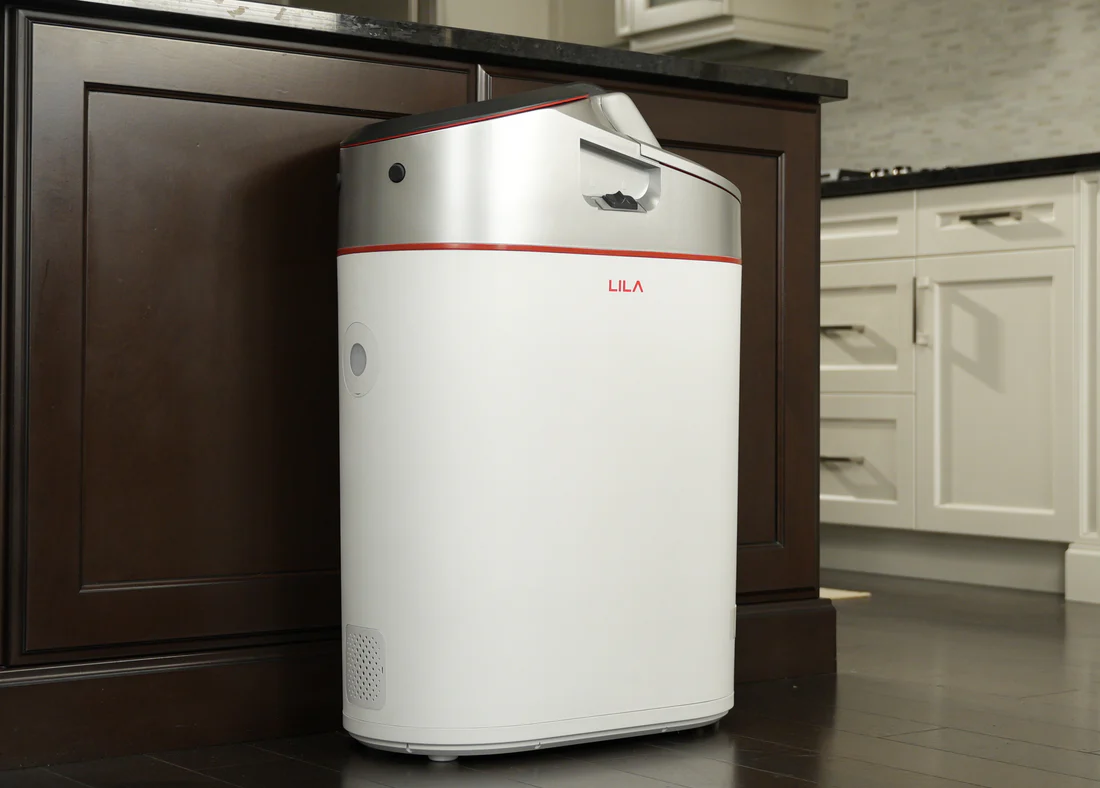
The first thing you notice about the LILA Pro is that it certainly doesn't look like a typical trash can. Visually, it has a sleek, techy, but incredibly clean look—it looks like it would fit perfectly in a NASA station. With its stark white panels and sharp red accents, it signals "high-performance hardware" and premium rather than "appliance warehouse." In the right kitchen, it becomes a quiet centerpiece: not flashy, but clearly not generic. It doesn’t pretend to be invisible; it looks intentional.
Build Quality
At a price point of $1,499 CAD (~$1099 USD), the LILA Pro needs to feel premium—and it does. The plastic is dense and well-finished, the lid has a solid, confident close, and the internal mechanisms feel engineered rather than improvised. There's no rattling or otherwise. It sits in the same mental category as a professional-grade mixer: something you buy once and expect to keep for years.
Ergonomics and Size
The LILA Pro is a serious investment into your kitchen space, and its size reflects that. Standing over 32 inches tall, it requires a dedicated spot in your kitchen.
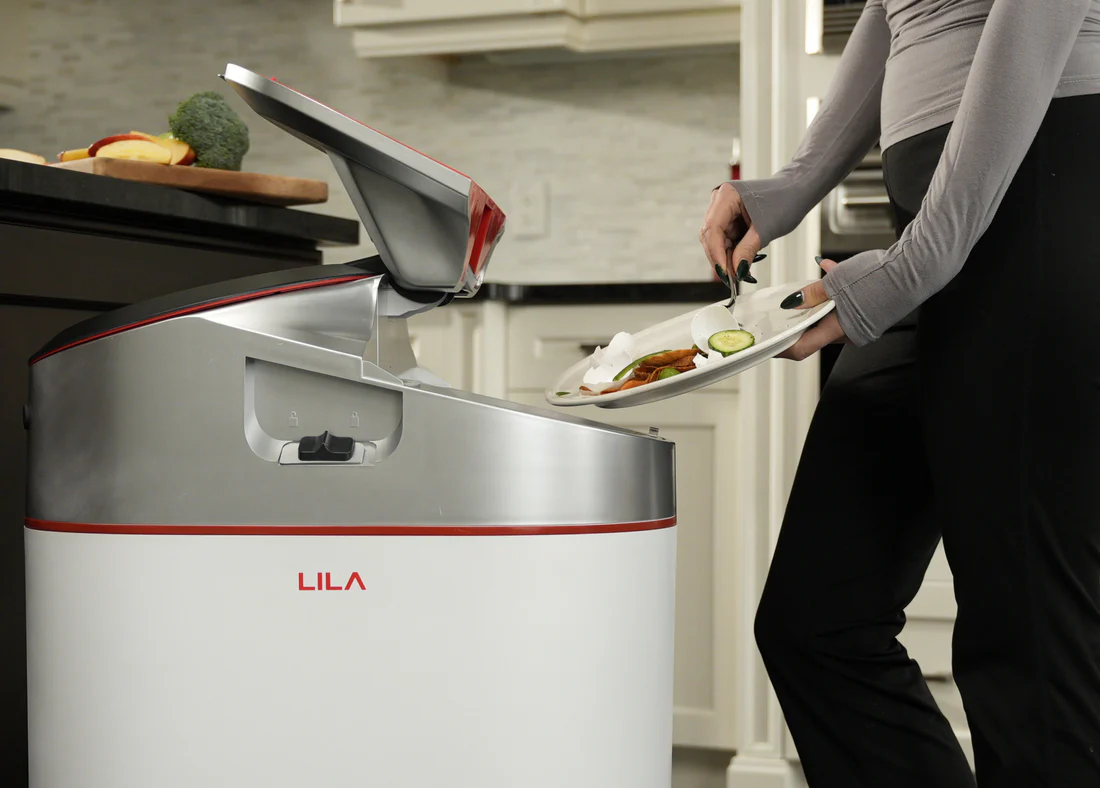
However, that size is the trade-off for its dual-chamber system. The ergonomics of the hopper are excellent—you can scrape a cutting board directly into it without aiming—and the dual-chamber design means you never have to stop adding waste while the other side is "cooking."
Design Pros:
Stunning, high-tech visual appeal that stands out in a modern home.
Industrial-grade build quality that justifies the premium price.
Dual-chamber logic allows for a continuous, "no-downtime" workflow.
Design Cons:
Massive footprint, especially compared to the kitchen composters available now; requires a large kitchen or dedicated floor space.
Heavy enough that you won't want to move it once it's placed.
Performance: Real Science, Real Results
The LILA Pro separates itself from the pack by using aerobic composting. While competitors simply bake your food until it's dry, the LILA Pro uses AI sensors to monitor temperature and moisture, creating the perfect environment for microbes to actually break down the organic matter.
In my experience, the output is night-and-day compared to dehydrators. After the 7–14 day cycle, you are left with dark, earthy material that smells like a forest floor, not a garbage disposal. It handles meat, dairy, and small bones with surprising efficiency, thanks to the managed airflow and dual carbon filters that keep the kitchen smelling completely neutral.
One thing to note: because it is a biological process, you do have to be mindful of what you put in. While it’s robust, very fibrous items like corn husks or large pits should be chopped down first to help the microbes do their job. Occasionally, if you add too many "dry" items, the output can come out a bit dusty, but a quick splash of water usually brings it back to life.
Performance: Real Compost, Not Just Warm Trash
Where the LILA Pro stands out is in how it handles the biology of composting.
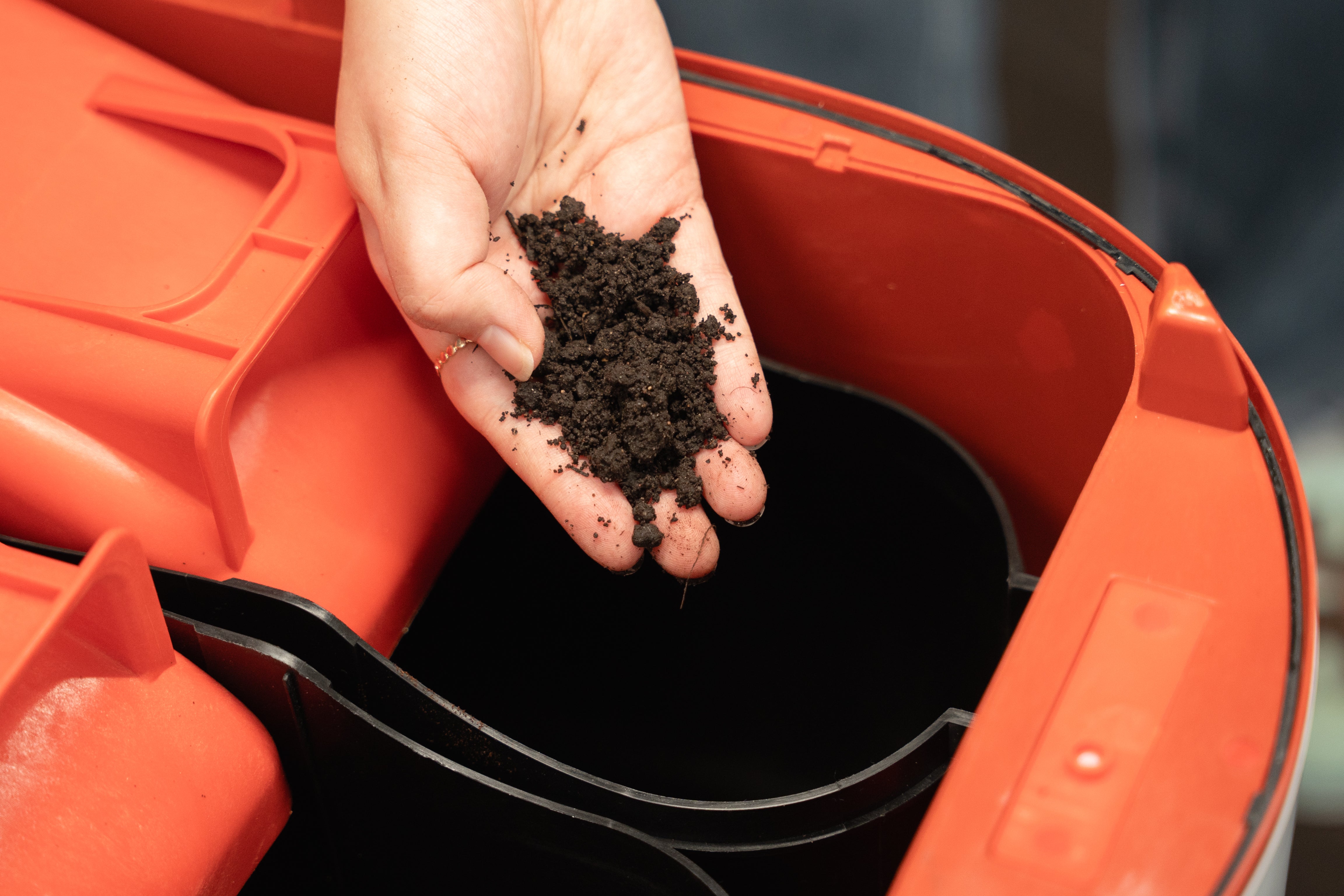
Instead of blasting food with heat for a few hours, LILA uses a controlled aerobic process. Sensors monitor temperature and moisture, and the system adjusts conditions to keep microbes happy. The result, after 7–14 days, is dark, crumbly material that genuinely looks and smells like compost rather than dehydrated leftovers.
In practice, that matters a lot if the end goal is feeding plants instead of just shrinking trash volume:
Veggie scraps, coffee grounds, eggshells, and fruit peels break down into a cohesive, soil-like output.
It can manage more challenging inputs (like meat, dairy, and small bones) better than the typical countertop unit, thanks to managed airflow and the filtration system.
Odor control is excellent: with the lid closed and the filters doing their job, the LILA Pro is remarkably neutral in a kitchen. Most of the “compost smell” only appears when opening it mid-cycle, and even then it’s more “earthy” than “garbage.”
Like any real composting system, it isn’t magic:
Very fibrous items (corn husks, thick citrus peels) do best when chopped a bit smaller.
If the mix skews too dry, the finished product can come out on the dusty side—but that’s easy to fix with a splash of water or by mixing it into existing soil.
But compared to quick-dry machines, the end result is much closer to what gardeners expect from a proper pile.
Final Verdict
The LILA Pro is not pretending to be all things to all people. It’s a $1,499 CAD (~$1100 USD) class appliance with a large footprint and a very specific purpose: transforming kitchen waste into genuine, high-quality compost without turning the home into a science experiment.
Its biggest strengths are:
Serious build quality that matches its price tag.
A clean, futuristic white-and-red aesthetic that makes it feel like part of a high-end kitchen, not an afterthought.
True microbe-driven composting that produces material plants will actually thrive on.
A design that clearly aims at long-term, daily use rather than novelty.
Its main drawbacks are:
Size: it really belongs in a larger kitchen, pantry, or utility space.
Upfront cost: even at promo pricing, it’s a major investment.
For households with the space, budget, and interest in real soil health, the LILA Pro makes a strong case for being the “last composter you need to buy.” For small apartments or casual cooks who mainly want less smelly garbage, it will be overkill.
For the right home, though, it feels like a rare thing in this category: a premium product whose design, performance, and long-term intent all line up.
Overall Rating: 9.0/10
About

Featured Posts