On the Radar: Sleepal AI Lamp
A sleep tracker for those who doesn't like wearables? Sign me up as interested.
Walking the CES floor this year, there was the usual parade of sleep gadgets: rings, headbands, masks, and wristbands all promising deeper insights in exchange for wearing yet another thing to bed. For anyone who already goes to sleep juggling a smartwatch, a phone on the nightstand, and a charger cable, that pitch can feel more exhausting than restful.
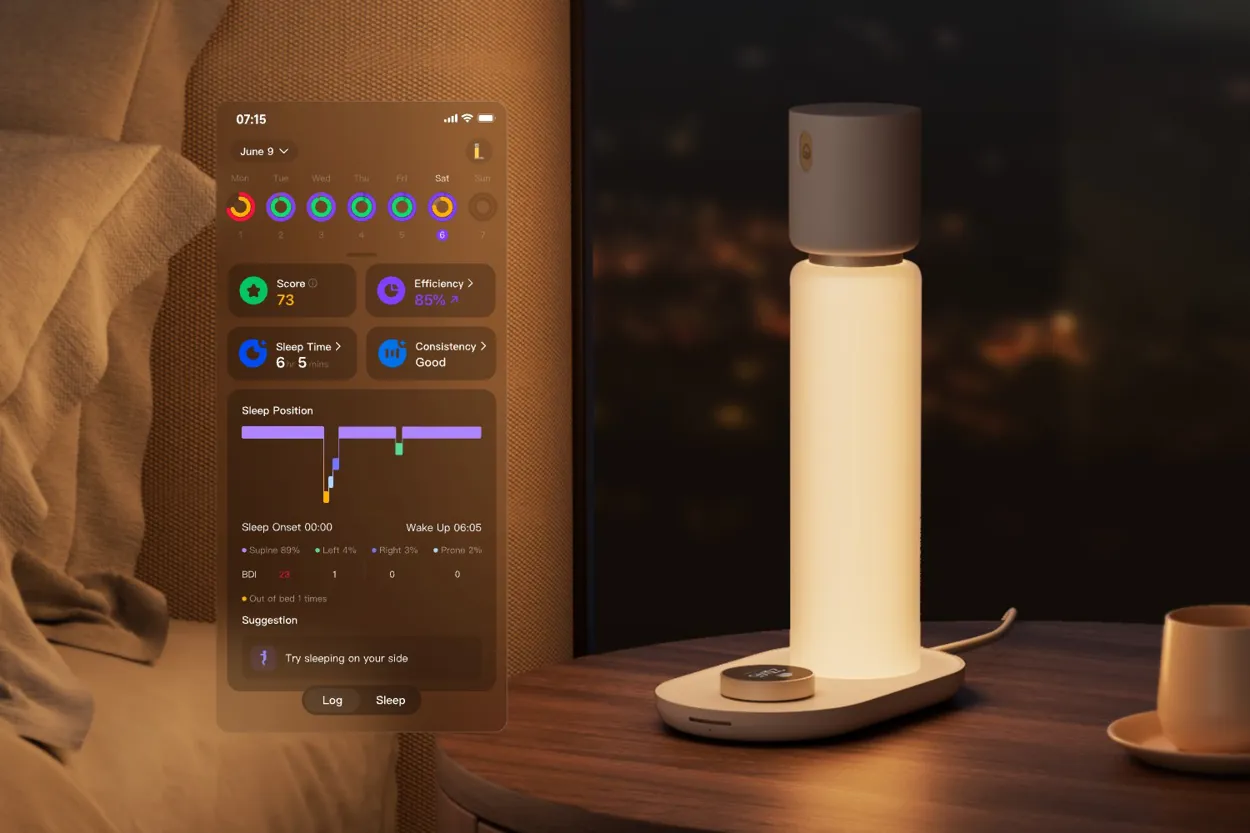
That’s why Sleepal’s booth stood out. On the table: what looked like a tastefully minimalist bedside lamp. No camera staring back. No band to strap on. Just a lamp that, according to the reps and the spec sheet, quietly runs a full‑blown sleep lab every night without asking the sleeper to wear or remember anything. Personally, as someone who dislikes wearing wearables to sleep and loves ambient lighting, well, could we say that this lit up my interest?
The Sleepal AI Lamp, a contact‑free sleep intelligence system that just won three CES 2026 Innovation Awards in Accessibility & Longevity, Digital Health, and Smart Home categories. It’s an ambitious idea: turn the most ordinary object by the bed into a sensor‑rich, AI‑driven sleep companion.
This is very much an early, “On the Radar” take—careful first, optimistic second—but Sleepal’s lamp is interesting enough that it’s worth bookmarking now and watching closely when real‑world reviews land.
Key Specs
Feature | Details (Pre‑Launch) |
|---|---|
Product type | Contact‑free AI sleep intelligence lamp |
Primary use cases | Sleep tracking, sleep coaching, smart alarm, circadian lighting, white noise |
Sensors | Millimeter‑wave radar, thermal sensor, acoustic/microphone, temp/humidity/light/noise |
Tracking capabilities | Sleep stages, heart rate, respiratory rate, snoring, movement, posture (claimed) |
Light system | Full‑spectrum, high CRI (Ra95+), zero‑blue‑light mode, adaptive “Lumisense” glow |
Audio features | White noise, guided meditation/relaxation audio, smart alarms |
Smart home integration | Apple HomeKit, Home Assistant (as per CES listing) |
Connectivity | Not fully detailed; Wi‑Fi/Bluetooth implied but not exhaustively specified |
Privacy hardware | No cameras, hardware mute switch for microphone |
Materials / finishes | Modern neutral lamp design shown; exact materials and full color lineup not listed |
Awards | CES 2026 Innovation Awards Honoree in 3 categories |
Availability | Pre‑launch; CES 2026 debut, pre‑order / waitlist stage |
Design: A Lamp First, Lab Second
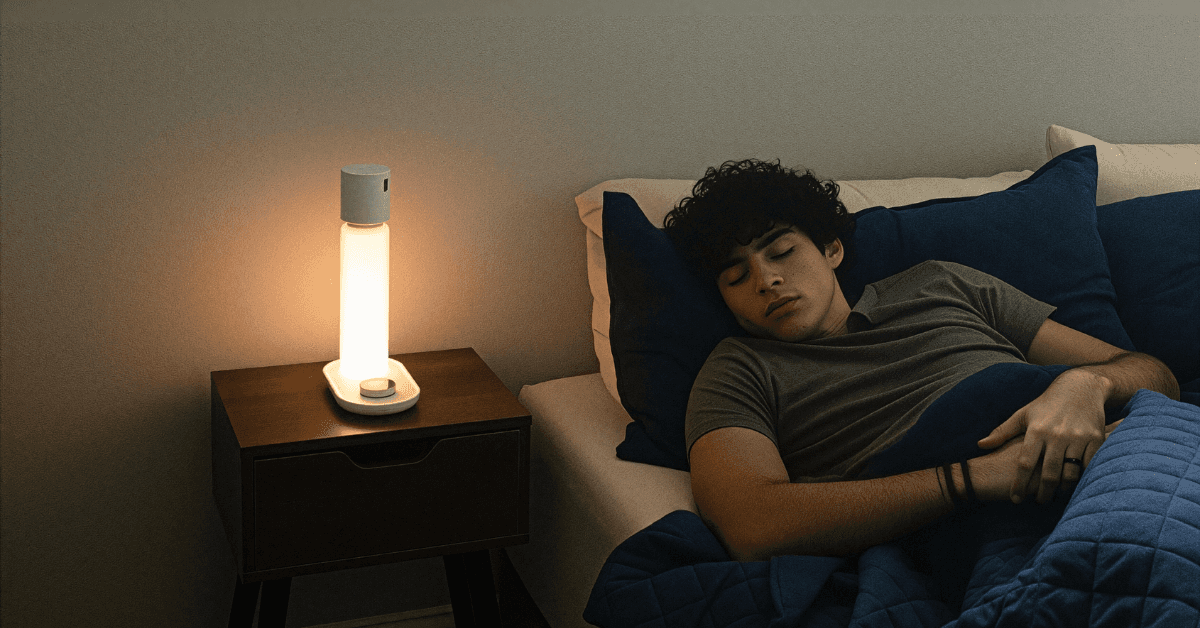
For a product with this much tech inside, the visual impression is deliberately calm. The Sleepal AI Lamp looks like it belongs in a modern bedroom long before anyone hears about millimeter‑wave radar.
Build & Aesthetics
Soft, neutral design
From the CES images and press shots, the lamp has a smoothly rounded silhouette with a diffused light surface, more like a high‑end designer lamp than a gadget. The aesthetic leans modern and understated, which matters if it’s going to sit inches from the pillow every night.“No camera” by design
There’s a growing discomfort with putting camera-equipped devices in the bedroom. Sleepal leans into that by using radar, thermal, and acoustic sensing instead of optics. There’s no visible lens staring at the bed.Hardware privacy controls
The presence of a physical mute switch for the mic is a thoughtful touch. Even if processing is mostly local, having a hardware control makes it feel less like a black box and more like an appliance that can be tamed when needed.
Ergonomics & Everyday Use
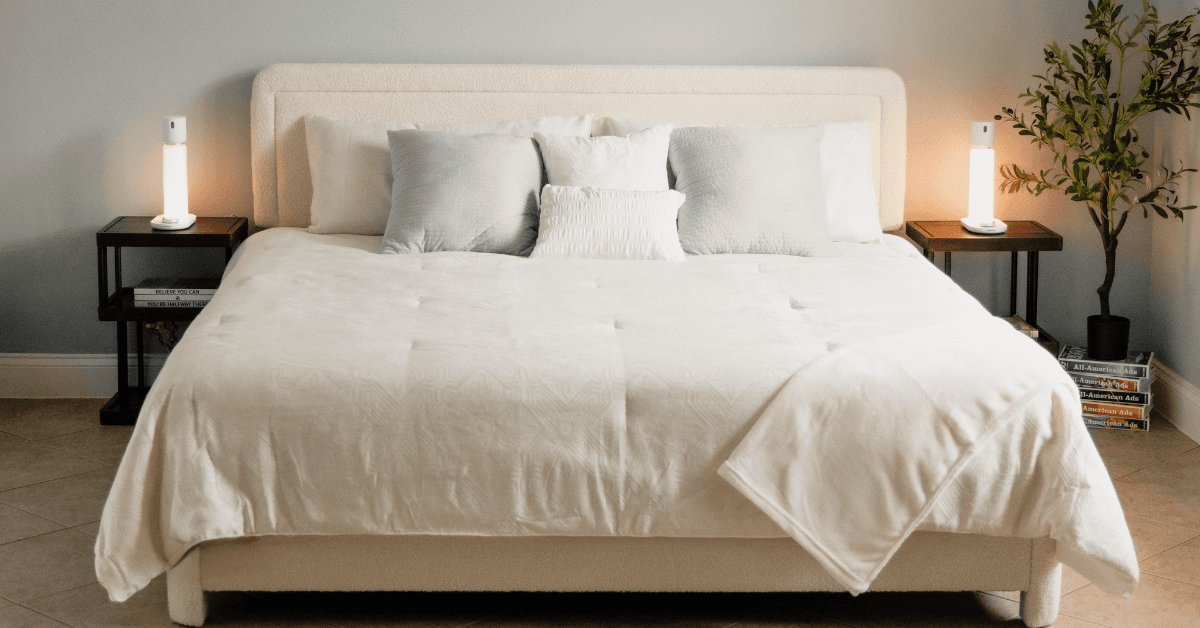
Nightstand‑friendly form factor
It’s clearly designed to live on one side of the bed, pointed toward the sleeper. How well it manages couples (one sleeper on each side) is something that will need testing, but the directional design suggests careful consideration of field of view for the radar and audio sensing.Turn‑to‑snooze interaction
One small but delightful detail is the “turn the lamp to snooze the alarm” gesture that’s been mentioned in some writeups. It turns the physical object into part of the interaction, instead of relying solely on phone taps and button presses in the dark.Cable / footprint unknowns
The usual daily annoyances—how the cable exits the base, whether the footprint competes for space with phones and books, and how stable it feels when bumped—aren’t clear from pre‑launch material. Those small ergonomic details can make or break whether a device quietly disappears into the room or constantly draws attention.
Design Pros (Early Impressions)
Blends into the bedroom as a regular lamp, not a clinical device
No visible cameras
Physical controls for privacy and alarm snoozing
Lamp quality (CRI, zero‑blue option) seems thoughtfully prioritized
Design Questions / Cons (So Far)
No public info yet on exact materials, weight, or durability
Unknown how well it fits smaller nightstands or unusual layouts
Only one aesthetic shown so far; unclear if more finishes will be offered
How Sleepal Is Supposed to Perform
Because this is pre‑launch, there’s no way yet to say how well the Sleepal AI Lamp works in practice. What can be unpacked are the claims and the technical direction—and that’s where things get interesting.
The Sensor Stack: Radar, Thermal, and Audio
Sleepal isn’t just a microphone and a timer wrapped in a lamp shell.
According to the CES Innovation Awards listing and the official site, the lamp uses:
Millimeter‑wave radar to detect micro‑movements from breathing and subtle body shifts
Thermal sensing to understand body and room heat patterns
Acoustic sensing to detect snoring, coughs, and environmental noise
Environment sensors (temperature, humidity, ambient light, and noise levels) to map conditions around the sleeper
In theory, this combination allows the lamp to:
Infer sleep stages (light, deep, REM)
Measure heart and respiratory rate throughout the night
Flag snoring or abnormal breathing patterns
Understand when the sleeper is in bed, out of bed, or restless
Track how the room conditions may be affecting sleep quality
Sleepal claims that its radar and AI pipeline perform accurately even through blankets and in shared rooms, which is not trivial. Anyone who has lived with motion sensors knows how easily pets, fans, and partners can confuse detection.
The AI Model & Clinical Ambition
Sleepal cites:
AI models with 1B+ parameters
Training data from over 2,000 nights of polysomnography (PSG)—the gold standard of sleep studies
The CES submission goes further with quantitative claims, mentioning low error rates for respiratory metrics compared with clinical gear (CES page).
That doesn’t automatically make it a medical device, but it signals a more serious approach than “we eyeballed some Fitbit graphs and built an app.” If the training and validation are as robust as advertised, it could get closer to real clinical insight than many consumer trackers that rely primarily on heart rate plus movement.
Right now, though, all of this comes from Sleepal itself and CES materials, not independent labs. That’s why this sits firmly in “On the Radar” territory rather than a full endorsement.
The Lamp as a Sleep Coach
Beyond raw tracking, the AI Lamp leans heavily into coaching and environment shaping:
Circadian‑aligned lighting
Adjustable color temperature to avoid blue‑heavy light close to bedtime
Sunrise‑style wake‑up where the lamp brightens gradually ahead of the alarm
Audio guidance
White noise, rain, and nature sounds
Guided meditations and wind‑down sessions
Behavior‑aware adjustments
Long‑term analysis of habits, bedtime consistency, and environment factors
Personalized suggestions, such as nudging room temperature or adjusting light timing
This is where the product bridges the gap between “just measuring sleep” and actually helping sleep get better. If the coaching is well‑designed, it can turn a passive data stream into something actionable.
The big unknown is how smart or generic that coaching will feel. That only emerges over weeks of daily use.
Real‑World Frictions It Might Quietly Fix
This is where the Sleepal AI Lamp has genuine everyday appeal if it performs as pitched.
No more “I forgot to wear my tracker” nights
When sleep tracking depends on a watch or ring, there are always those nights where the device ends up on the charger or left on the desk. A lamp remains in place. If it works, data continuity improves simply because it’s impossible to forget.For people who find wearables distracting
Even light, well‑designed bands can feel like “gear” when the goal is to unwind. A passive lamp is easier to accept, especially for those who are already sensitive to textiles or pressure when sleeping.Gentler mornings
A sunrise alarm plus a physical turn‑to‑snooze gesture can be less jarring than a blaring tone and a frantic phone swipe. That’s small, but these little micro‑experiences shape how a day starts.Shared or family scenarios
For older relatives who would never wear a ring or a smartwatch, but wouldn’t object to a nicer bedside lamp, a device like this could offer subtle monitoring around sleep disruptions or loud snoring without stigmatizing “health tech” in the bedroom.
All of this depends on the sensing actually working reliably, but the shape of the product is well‑aligned with normal human behavior: sit down, turn on a lamp, go to sleep.
Comparisons: How It Stacks Up Conceptually
Because Sleepal AI Lamp isn’t shipping yet, this comparison focuses on what it aims to be versus what’s already available.
Sleepal AI Lamp vs. Withings Sleep Analyzer
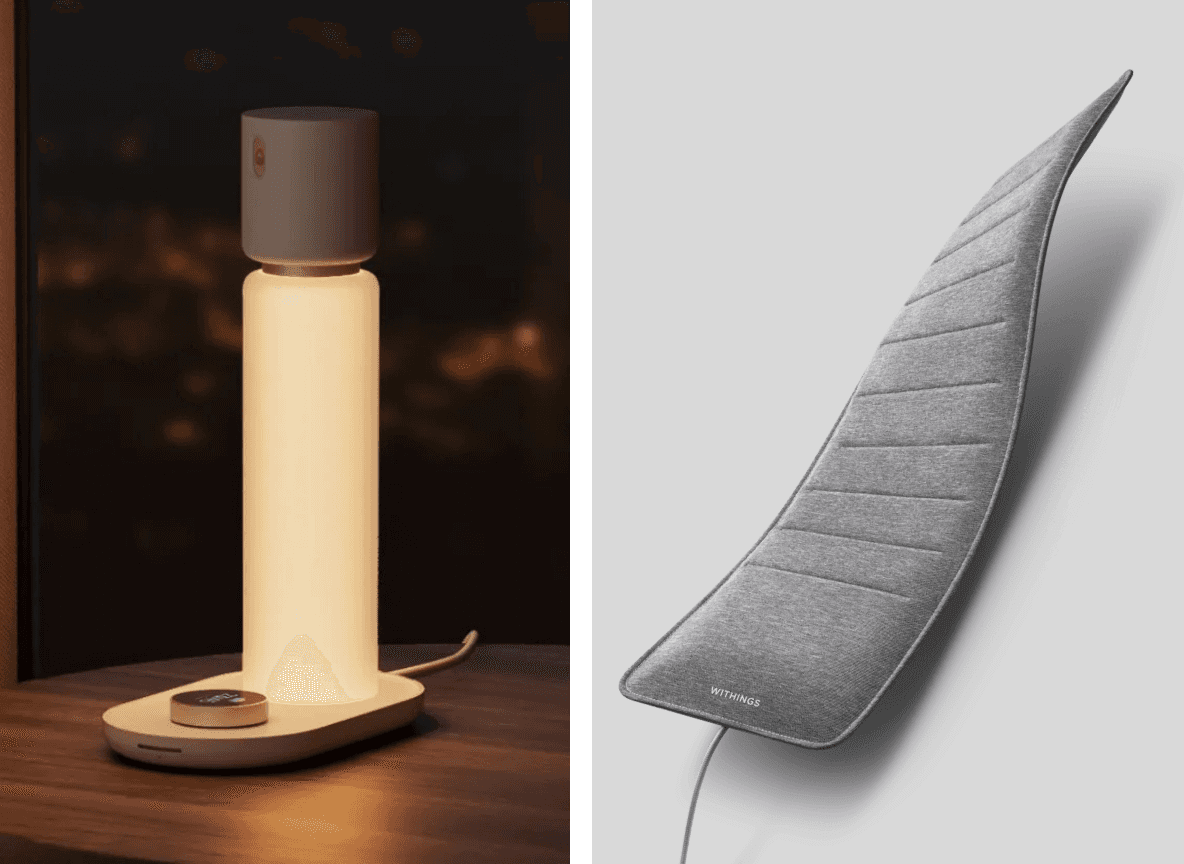
Withings Sleep Analyzer is one of the better‑known contact‑free trackers. It slides under the mattress and uses pressure and movement data to infer sleep phases and breathing patterns.
Where Withings wins (right now):
It exists and ships today, with years of user data and independent reviews behind it.
It offers solid integrations with health platforms and the broader Withings ecosystem.
Once installed, it’s relatively invisible—no device on the body and no change to the room’s look.
Where Sleepal could pull ahead (if it delivers):
Stronger, multimodal sensing: radar + thermal + audio + environment, not just under‑bed movement.
Deep integration with lighting and sound, turning the sleep environment itself into part of the therapy.
Smart home hooks (HomeKit, Home Assistant) that may end up richer than what a mat can easily do.
Best fit today:
Withings is the safer pick right now for anyone who wants proven, contact‑free tracking and doesn’t mind a one‑time mattress setup.
Sleepal feels like the ambitious next‑generation version—a good one to watch, but not yet a buy‑button candidate.
Sleepal AI Lamp vs. Oura Ring
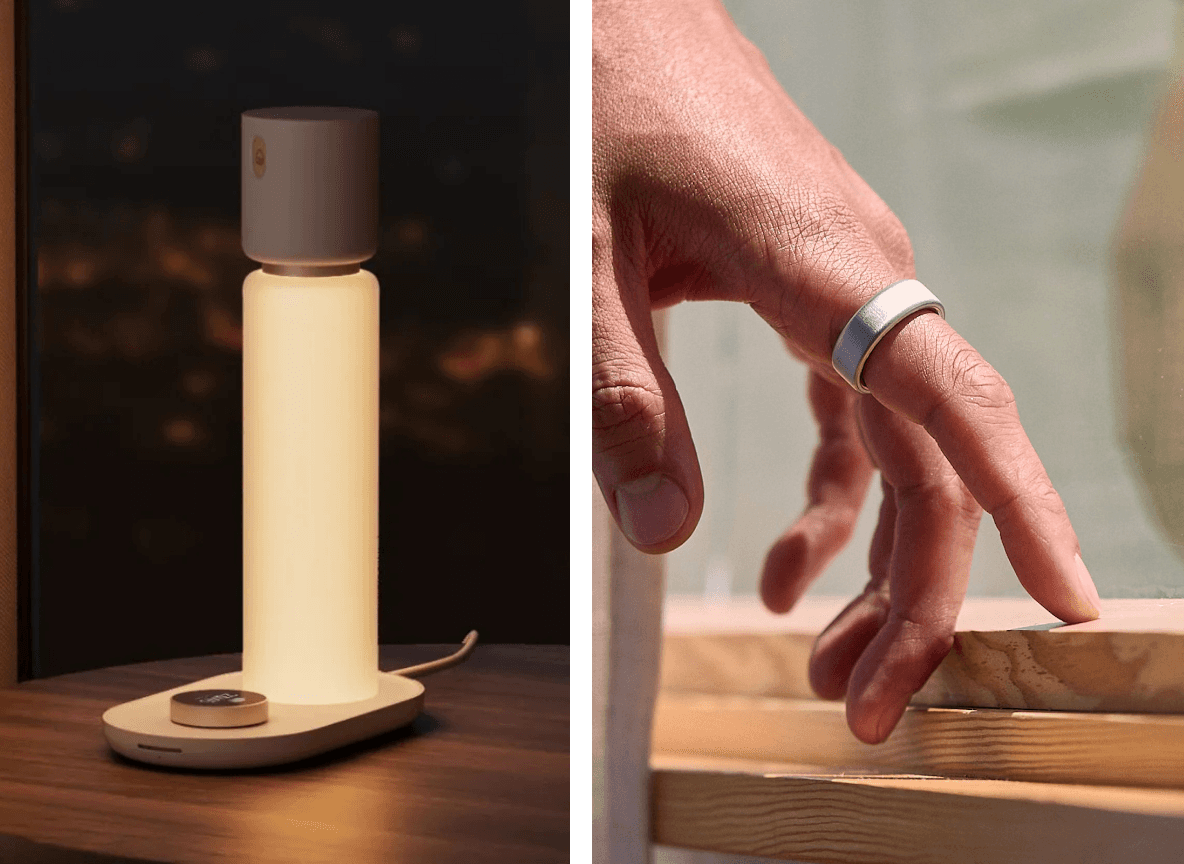
Oura Ring is often the reference point for serious sleep tracking in a small, wearable form: multi‑sensor, well‑validated in the wild, with a mature app and plenty of research behind it.
Where Oura wins (right now):
Mature ecosystem: years of iteration on algorithms, app experience, and coaching content.
Portable: sleep tracking follows the user to hotels, trips, naps on the couch, and beyond the bedroom.
Whole‑day view: readiness and recovery scores, activity data, HRV trends, and more.
Where Sleepal could shine (if it hits its marks):
No need to wear or charge anything—once the lamp is plugged in, tracking is ambient.
Stronger sense of the room environment and how it affects sleep.
Potentially better suited for those who only care about night‑time data rather than full 24/7 tracking.
Best fit today:
Oura remains one of the best choices for people who want high‑quality sleep and recovery data now, are comfortable with a ring, and like having metrics throughout the day.
Sleepal makes more sense for those who want sleep intelligence to fade into the room instead of living on the body, and are willing to wait until the accuracy story is proven.
Early Verdict: Why Sleepal AI Lamp Is On the Radar
This is not a product to rush out and buy yet—it’s not even fully available. But based on the CES showing and published details, it earns a place on the watchlist.
Who It Looks Best For
People who dislike wearing sleep trackers but still want detailed sleep data.
Smart home enthusiasts who want the bedroom to react intelligently to sleep, not just to schedules.
Families and caregivers looking for passive monitoring in a non‑intrusive form factor.
Biggest Strengths (On Paper)
Contact‑free, camera‑free tracking that could feel genuinely natural to live with.
A serious multi‑sensor and AI pipeline, trained on clinical‑grade data rather than pure guesswork.
Triple CES 2026 Innovation Award recognition in health, smart home, and accessibility categories.
Design that puts a good lamp and a well‑considered physical object at the center, rather than a tangle of plastic and LEDs.
Main Drawbacks & Unknowns
Accuracy remains unproven outside of Sleepal’s own data—no independent validation yet.
Price, exact availability, and regional rollout are still to be fully announced.
The quality of the app, coaching, and long‑term support is unknown; that’s often where sleep tech lives or dies.
For now, Sleepal AI Lamp sits firmly in “caution first, optimistic second” territory: the concept is strong, the engineering story is promising, and the awards are encouraging. If the real‑world performance ends up even close to the marketing, this could quietly become one of the most interesting smart bedroom devices of the next couple of years.
Official site for updates and waitlist: Sleepal.ai
About

Featured Posts