On the Radar: Dtablet Smart Pill Box
Discover Dtablet: a smart pill box with biometric locking and Find My tracking.
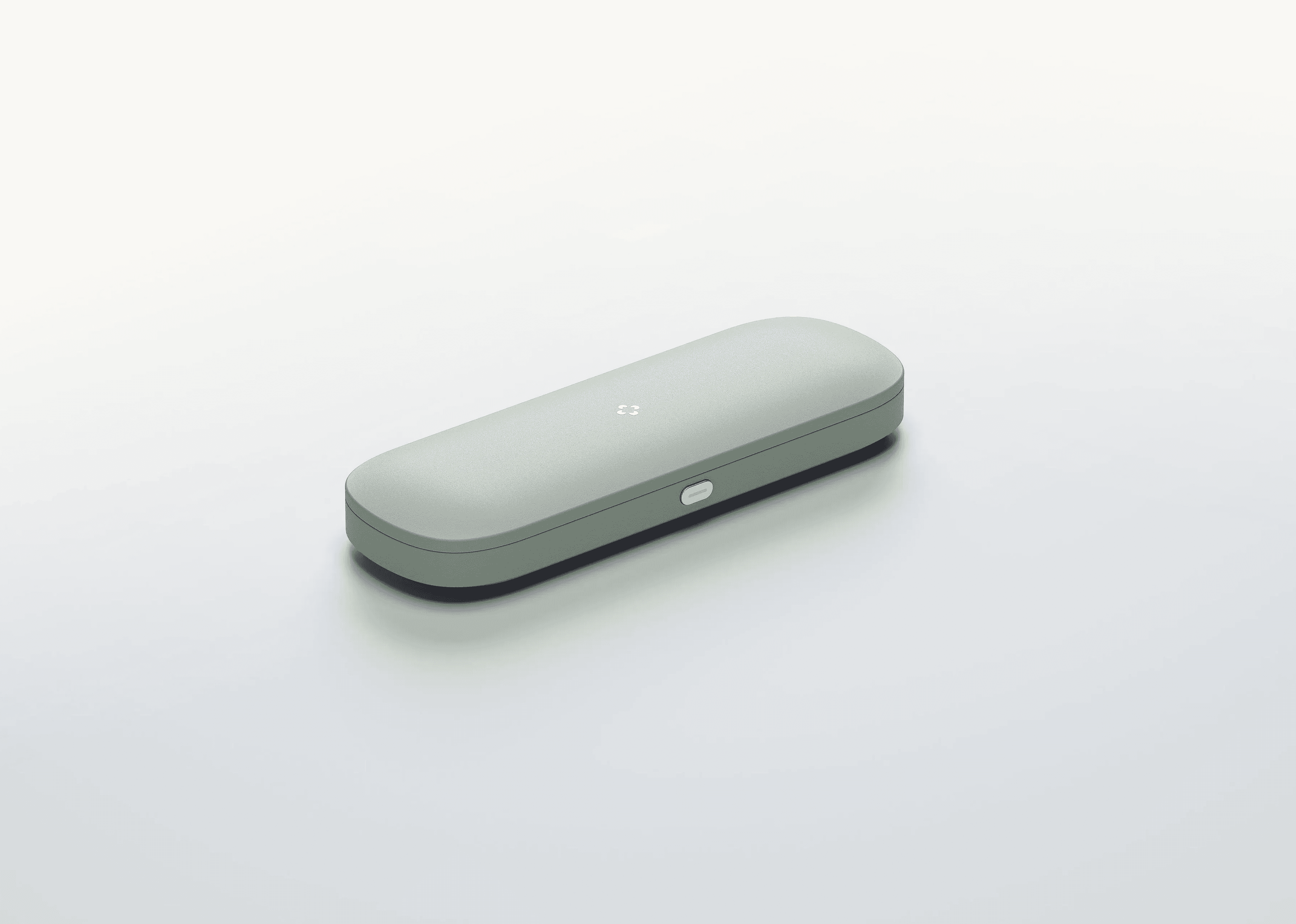
The original rabbit hole started with a pretty ordinary problem: trying not to forget daily meds when life isn’t happening on a perfectly stable schedule. Travel, weird weekends, late nights—it doesn’t take much to turn “I’ll take it later” into “Wait, did I already take that?” That’s how Dtablet popped onto the radar: a sleek, connected weekly pill box that promises smart reminders, biometric security, and built‑in tracking.
Dtablet is not yet on the market. The official site is taking waitlist sign‑ups, specs are labeled as “preliminary,” and there’s no pricing or firm release date listed. So this isn’t a recommendation—more of a quick look at a promising idea and how it compares to existing smart pill boxes.
What Dtablet Is Promising
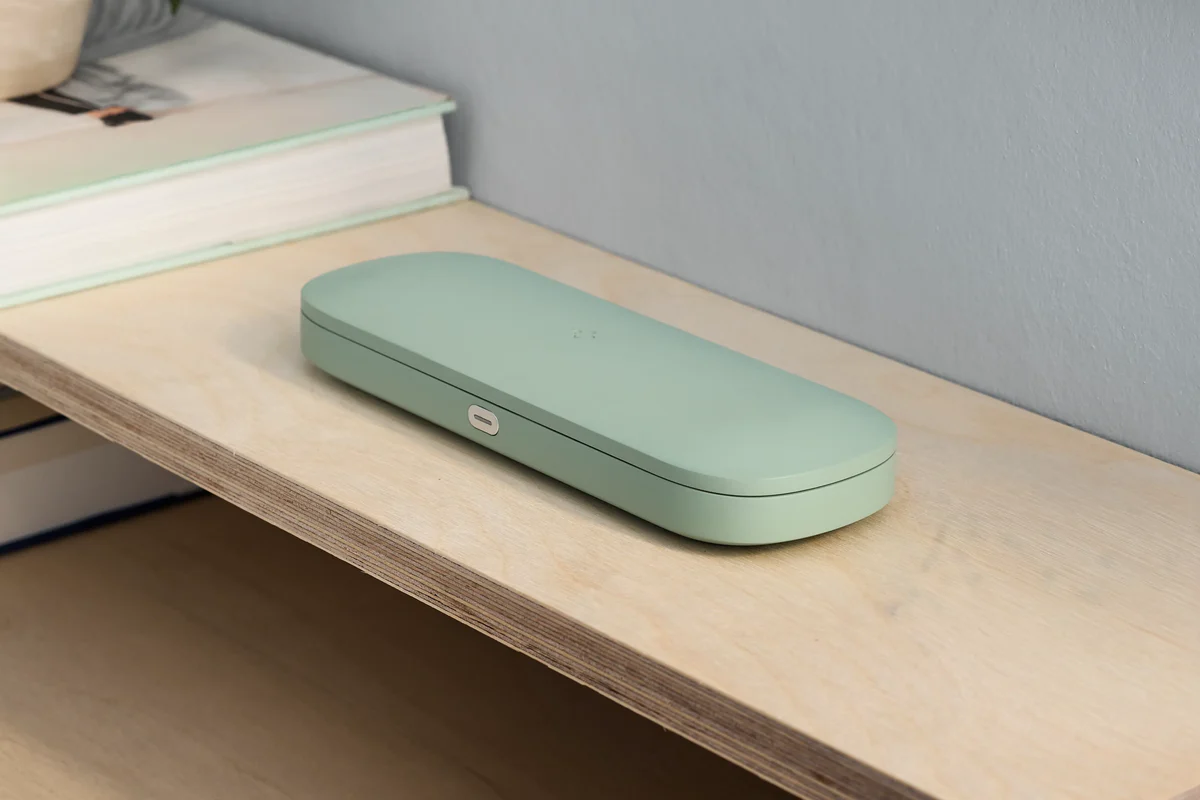
Based on the official website and FAQ, Dtablet is built around a simple weekly organizer but with a more “tech accessory” mindset than a typical plastic pill case:
Weekly, travel‑friendly form factor
A compact 7‑day organizer (210 × 70 × 30 mm) with seven individual compartments, made from food‑grade, BPA‑free, impact‑resistant materials. The pitch is very much “daily use and travel” rather than “big countertop appliance.”Adaptive app‑based reminders
A companion app shows what to take and when, lets doses be logged, and adjusts reminders if a dose is late, if the user is traveling, or if time zones change. There’s support for snoozing and skipping, with rules tuned to personal habits.Biometric security plus mechanical fallback
The pill box locks and unlocks via a smartphone or tablet, using whatever biometric system the device supports (Face ID, Touch ID, Windows Hello, etc.). There’s also a physical button and an emergency mechanical opening if something goes wrong. A lock indicator light shows when the box is open and ready.Location tracking baked in
One of the more distinctive features is native support for Apple Find My and Google device tracking, so the pill box shows up like a tracker. That’s aimed squarely at “left it in a hotel room / forgotten in a bag / where did it go?” anxiety.Battery and charging
Up to four weeks of use on a single charge based on typical daily unlocking, with USB‑C charging and about one hour to charge fully.
It’s meant for independent users rather than a full medical device. There’s no mention of pill‑sensing hardware or FDA‑style approval; the system relies on the user to log or at least respond to reminders rather than proving that a pill was swallowed.
How It Compares to Existing Smart Pill Boxes
There are already a few solid smart organizers and dispensers on the market that cover similar ground—with key differences in form factor, automation, and caregiver support.
EllieGrid Smart Pill Organizer
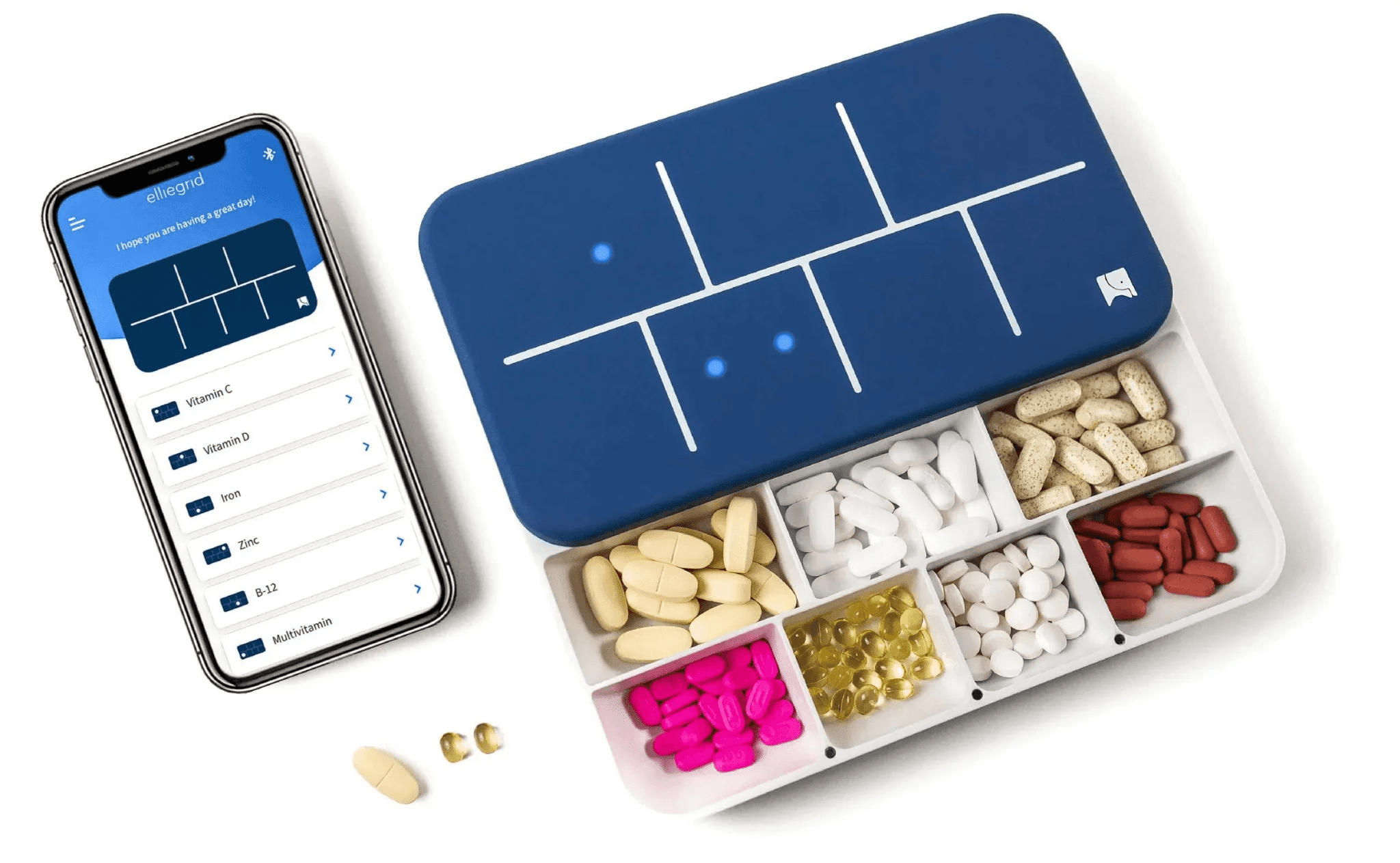
What it is: A flat, app‑connected pill organizer with compartments arranged in a grid and a lid. It’s designed to hold up to about 30 days’ worth of medications across seven compartments, depending on pill size.
Smart features:
“Smart alarms” that adjust if pills are taken early/late or on different weekend schedules.
Audio + visual alarms on the box when it’s time to take meds.
App‑based reminders and compliance tracking over time.
Versus Dtablet:
EllieGrid is currently shipping and well‑reviewed, making it a proven choice for anyone who wants an attractive, app‑connected organizer that mostly lives at home but can travel. Dtablet’s pitch leans more into biometric locking and built‑in Find My / Google tracking, which EllieGrid doesn’t natively offer. On the other hand, EllieGrid is clearly documented and reviewed today; Dtablet’s real‑world performance is still unknown.
PillMeister IoT Pillbox
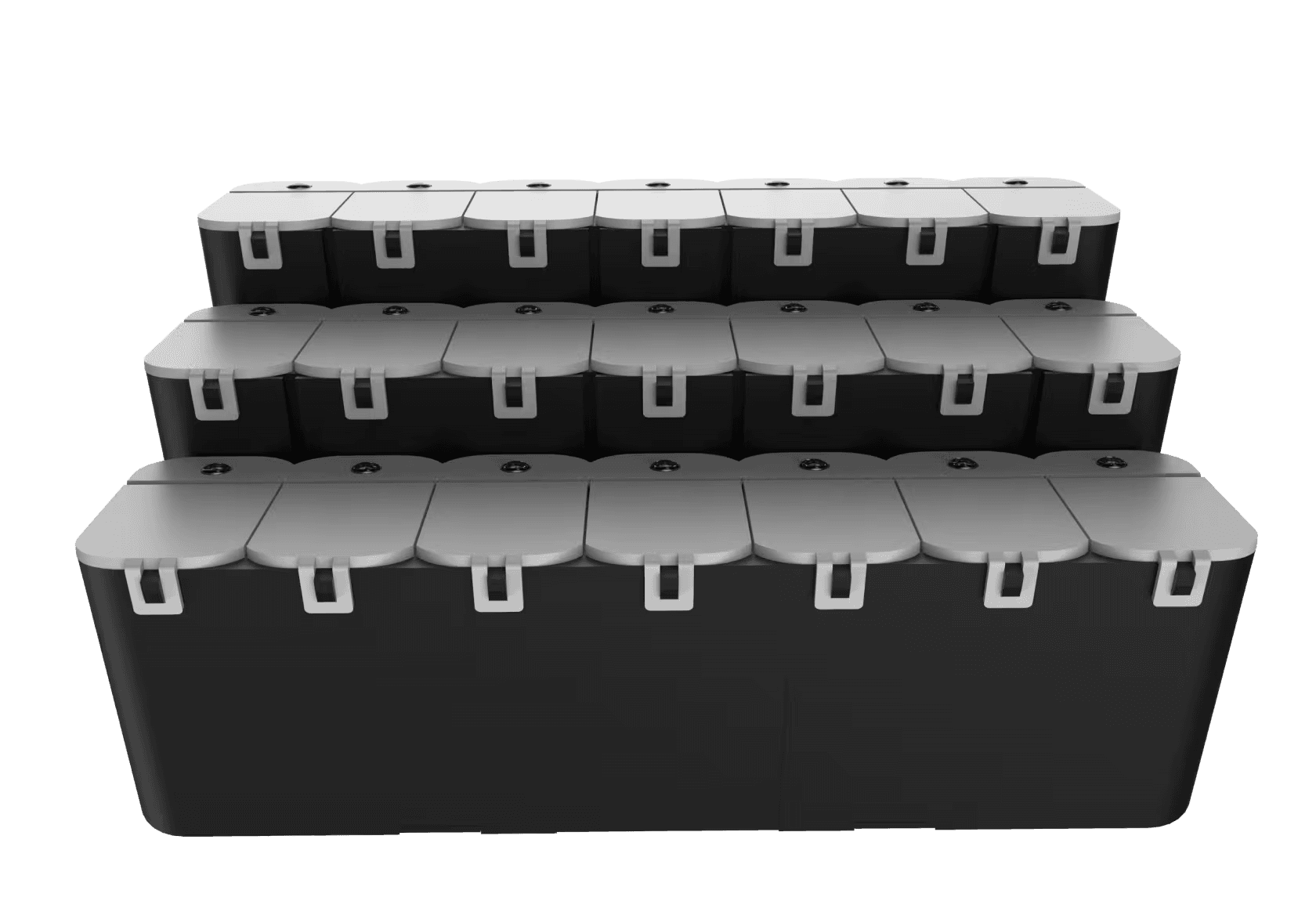
What it is: A connected pill box + app ecosystem aimed at managing medication for one person or a small family. The box uses audio‑visual alarms and connects via Wi‑Fi/hotspot during initial setup, then runs through the app thereafter.
Smart features:
Alarms per compartment, with lights and sounds when it’s pill time.
Missed‑dose follow‑up notifications after snooze.
Calendar view of present/past/future medication schedule.
One app can manage up to three pill boxes, making caregiver oversight much easier.
Versus Dtablet:
PillMeister focuses heavily on multi‑box, multi‑user management and caregiver alerts: it’s about keeping an eye on medication for more than one person in a household. Dtablet, by contrast, looks more like a single‑user, privacy‑oriented, travel‑friendly box. It doesn’t yet advertise multi‑box management or caregiver dashboards in the same way; the standout differences are again biometric lock and global device‑network tracking.
Hero Smart Pill Dispenser (the “big gun” option)
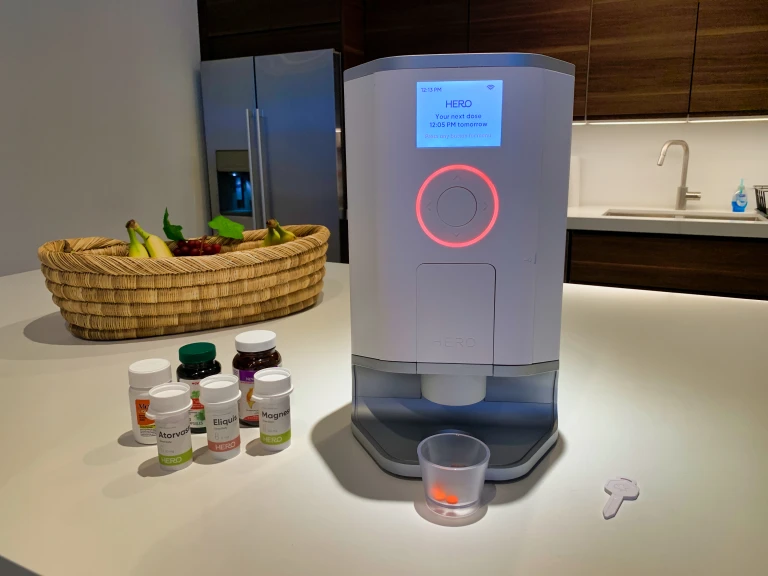
What it is: A countertop automated dispenser about the size of a coffee maker, with Wi‑Fi connection, app, and subscription model (Hero).
Smart features:
Holds up to a 90‑day supply of up to 10 meds.
Automatically sorts and dispenses at schedule with a single button.
Pill‑time reminders, missed‑dose alerts, refill monitoring, and remote caregiver monitoring.
24/7 live support, HIPAA‑compliant, and clearly aimed at more complex regimens and higher‑risk use cases.
Versus Dtablet:
Hero is basically a home medication robot—overkill if the main goal is just “don’t forget one daily pill when traveling.” Dtablet is the opposite end of the spectrum: no automatic dispensing, no giant pill inventory, no subscription; just a secure, trackable weekly case with smart reminders. Anyone considering Hero is probably managing a multi‑drug, multi‑dose schedule and needs automation plus serious caregiver oversight, not a compact travel box.
So, Is Dtablet Worth Readers Paying Attention To Yet?
As of now:
Pros (on paper):
Thoughtful feature mix for everyday independent users who travel: weekly layout, compact size, app reminders.
Biometric security and an emergency mechanical opening strike a nice balance between safety and fail‑safes.
Built‑in Apple Find My / Google tracking is genuinely useful for anyone who tends to misplace things.
Sensible battery + USB‑C charging story.
Unknowns (and they’re important):
Price and launch date are not publicly disclosed.
No independent reviews, no long‑term reliability data, and no way to gauge app quality yet.
Details around caregiver features, accessibility, and how smooth the Bluetooth/connection experience is are still missing.
Given that, it feels premature to label Dtablet a “must‑have” or put it on a best‑of list. It is, however, worth flagging as a promising upcoming option for a very specific type of person:
Someone who wants a portable weekly pill box with strong privacy/security, cares about not leaving it behind, and is comfortable relying on a smartphone for reminders and unlocking.
For anyone who needs a solution right now, existing options like EllieGrid, PillMeister, or a more heavyweight device like Hero already offer most of the smart‑reminder and logging functionality—with real‑world reviews and clear pricing.
Dtablet’s concept looks good. Whether it becomes easy to recommend will come down to three things after launch: price, app reliability, and how polished the overall experience feels next to the smart pill boxes that are already out there.
About

Featured Posts