Mill Food Recycler Review: The End of Stinky Kitchen Trash?
Discover if the Mill Food Recycler is worth the $999 price tag. Our review covers odor control, design, and how it turns kitchen scraps into chicken feed.
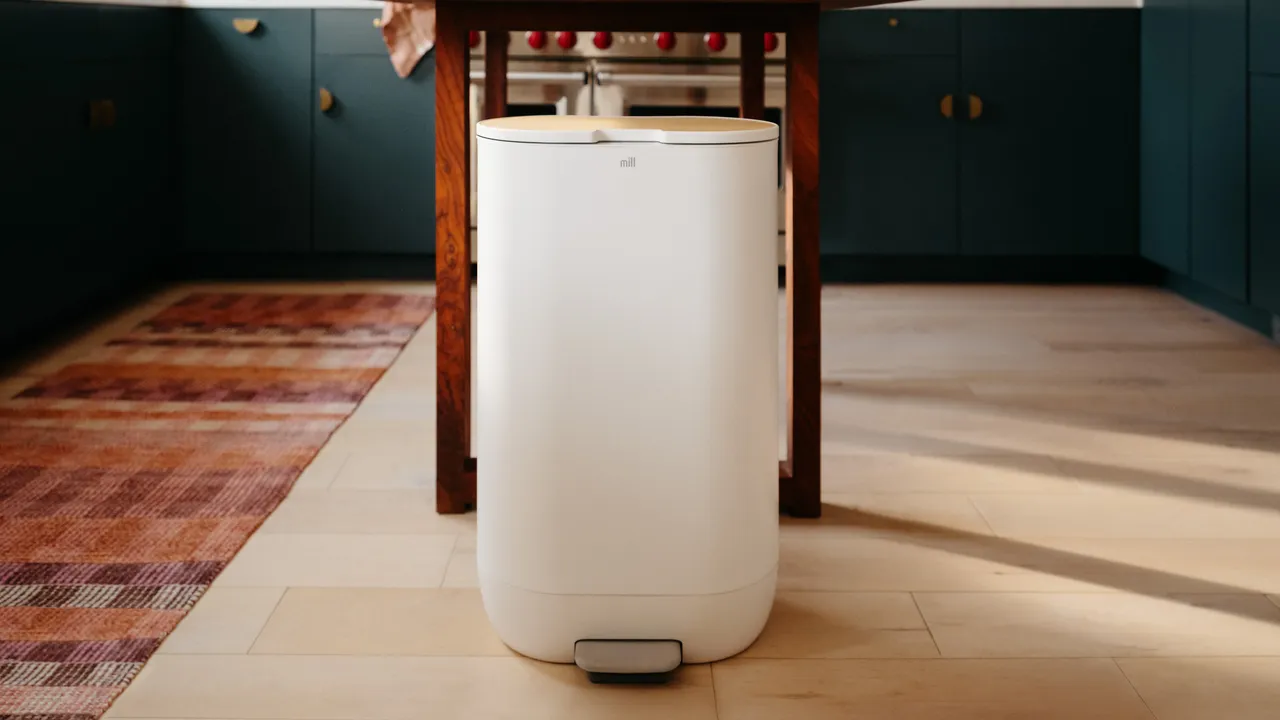
I’ve always wanted to be the kind of person who composts, but the reality of it never quite fit my lifestyle. In my kitchen, a standard compost caddy usually meant two things: a lingering smell of old broccoli and a constant battle with fruit flies the moment the weather turned warm. Like many people living in smaller spaces or dealing with finicky plumbing, I found that traditional "green" habits often came with a lot of daily friction and a fair amount of mess.
I started looking into the Mill because I was tired of the "ick" factor. I wanted a way to handle food scraps that didn't involve leaky bags or a stinky bin sitting on my countertop. The Mill isn't just a trash can; it’s a high-tech dehydrator designed to solve the practical headaches of food waste—the smells, the pests, and the constant trips to the outdoor dumpster. After putting it to work in my own kitchen, I wanted to see if this premium appliance actually delivered on its promise of a cleaner, easier home, or if it was just a high-priced solution to a problem that a simple plastic bucket could solve.
Initial Impressions
The Mill is a substantial piece of hardware. It’s tall, heavy, and looks more like a piece of modern furniture than a utility bin. Once I got it positioned near an outlet and connected to the app, the workflow changed almost instantly. Instead of carefully managing what went into the "stinky bin," I just started scraping plates directly into the Mill. There’s a quiet satisfaction in watching a pile of leftovers disappear into a sealed, odorless chamber, knowing that by the next morning, they’ll be reduced to a dry, shelf-stable material that smells more like toasted grains than garbage.
Price & Availability:
The Mill Food Recycler starts at $999 for a one-time purchase, with options for financing. There is also an optional subscription for the "pick-up" service if you want to ship your grounds back to Mill to be turned into chicken feed.
Official Website: Mill.com
Key Specs
Feature | Specification |
|---|---|
Capacity | 6.5 Liters (Holds ~12 lbs of wet scraps) |
Weight | ~68 lbs |
Dimensions | 27" H x 16" W x 15" D |
Mechanism | Automated heat-and-grind (Dehydrator) |
Filter System | Large-scale activated carbon (upcycled coconut shells) |
Available Colors | White, Black, Stainless Steel |
Warranty | 3 Years |
Design Review: A Trash Can You Actually Want to Show Off
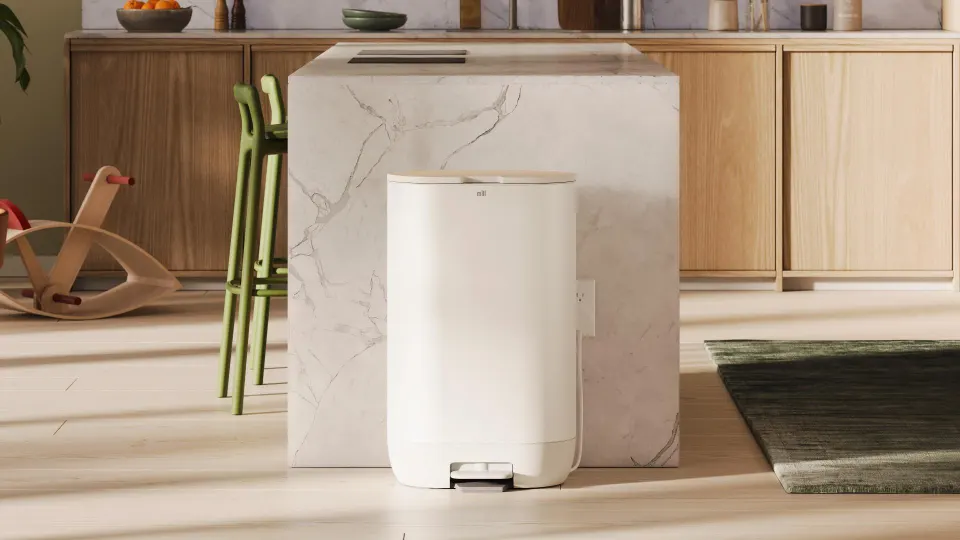
The Mill is undeniably beautiful. In a world of plastic bins and flimsy lids, its rolled metal exterior and soft-close lid feel incredibly premium. It’s designed to be a permanent fixture in your kitchen, and it carries that weight—literally. You aren't going to be tucking this under a sink; it demands its own footprint.
Build Quality & Ergonomics
The foot pedal is responsive and sturdy, which is a small detail that makes a huge difference when your hands are full of melon rinds. Inside, the ceramic-coated bucket is easy to lift out when it’s finally time to empty it (which, for my household, was only about once every three weeks). The internal augers are heavy-duty metal, capable of crunching through small bones and avocado pits without sounding like a woodchipper.
Ease of Cleaning
Because the process dries the food out completely, the bucket stays surprisingly clean. You don't get that "sludge" at the bottom that haunts traditional compost pails. If things do get a bit dusty, a quick wipe-down or a rinse of the bucket is usually all it takes.
Pros:
Stunning, minimalist aesthetic that fits modern kitchens.
Massive capacity; reduces trips to the outside bin by 50-80%.
The smart lock is a lifesaver for curious pets or toddlers.
Cons:
Large footprint; might be a struggle for very tiny galley kitchens.
Heavy; not something you want to move around frequently.
Performance Review: Does It Actually Work?
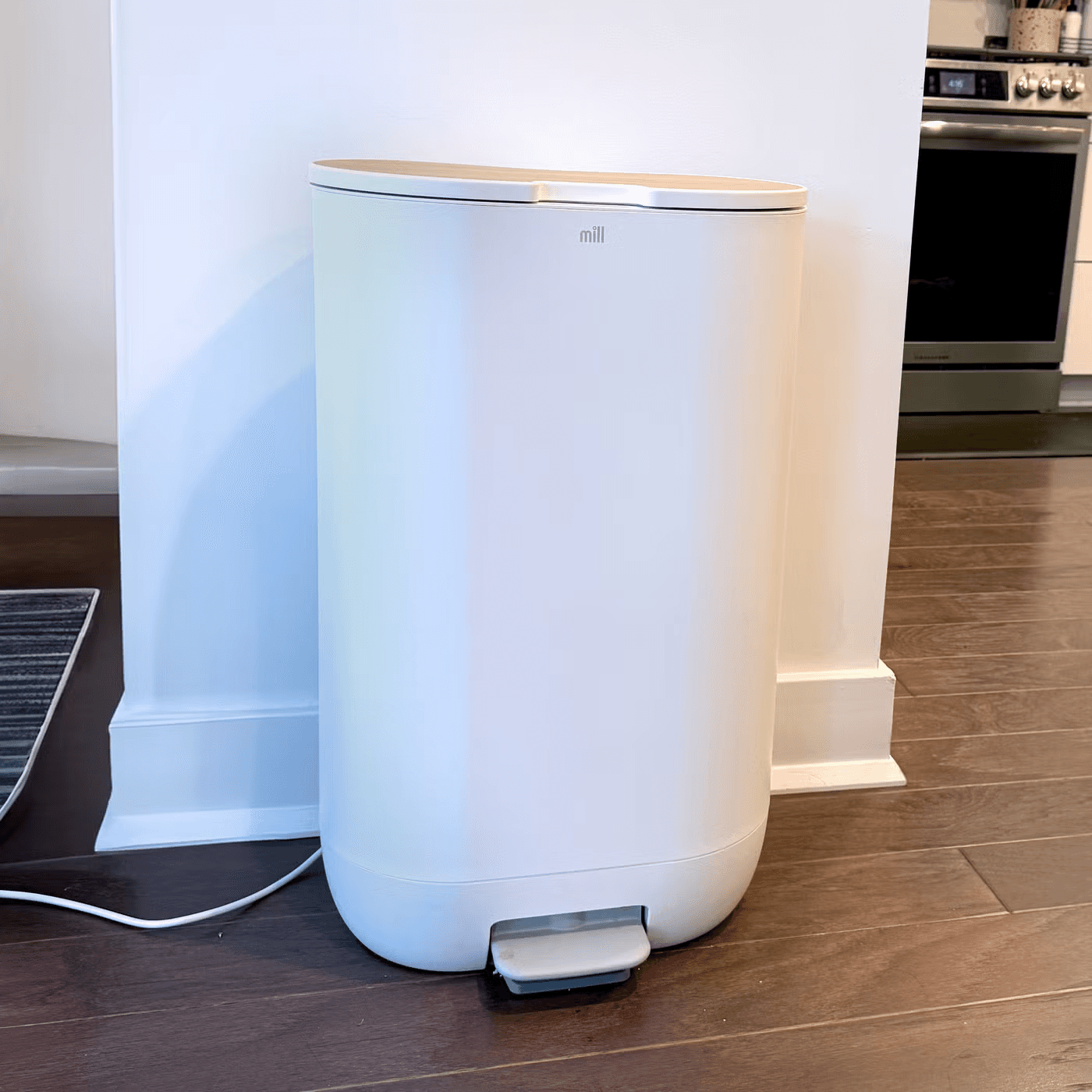
The short answer: Yes, and it’s surprisingly quiet. Mill claims the noise level is around 44 dB (like a quiet dishwasher). In my experience, it’s a low hum that fades into the background, though you will hear the occasional "crunch" if you’ve tossed in something hard like a peach pit.
Odor and Pest Control
This is where the Mill earns its keep. The carbon filter is massive—much larger than the tiny strips you find on countertop bins. Even after three weeks of "storing" dried scraps inside, there was zero smell. For the first time in years, I didn't have a single fruit fly in my kitchen during August. That alone felt like a victory.
The "Food Grounds" Result
It’s important to remember that the Mill produces Food Grounds, not finished compost. The output looks and smells a bit like coffee grounds or dry cereal. If you have a backyard garden, you can't just dump these on top of your roses; they need to be mixed into soil or a traditional compost pile to break down properly. If you don't garden, the Mill subscription allows you to mail the grounds back in pre-paid boxes, where they are processed into chicken feed—a very cool "closed loop" system.
Energy Efficiency
I was worried about the electricity bill, but Mill uses about 0.7 kWh per day on average. That’s roughly $4 a month—less than the cost of a single latte to keep my kitchen smelling fresh and my trash bag usage at an all-time low.
Verdict: Is the Mill Worth It?
The Mill is a luxury appliance, there’s no way around the price tag. However, if you are someone who cooks daily, lives in an apartment where trash runs are a chore, or simply hates the "ick" factor of traditional composting, it is a transformative device. It turns a gross, smelly chore into a clean, automated background process.
Best For:
Serious home cooks who generate a lot of scraps.
Apartment dwellers or people in "walk-up" buildings.
Anyone who wants to reduce their environmental footprint without the mess of a worm bin.
Biggest Strengths:
Total elimination of kitchen odors and fruit flies.
Incredible build quality and 3-year warranty.
Habit-changing automation; you just drop food in and walk away.
Potential Drawbacks:
High upfront cost ($999).
Requires a subscription if you want the mail-back service.
Not a "true" composter; grounds require further processing if used at home.
Final Recommendation:
If you have the budget, the Mill is the most polished, effective solution for residential food waste on the market. It’s a rare gadget that actually makes your daily life cleaner and more pleasant.
Score: 8.8 / 10
About

Featured Posts