>
>
Pulsetto Vagus Nerve Stimulator: The Stress Relief Gift Nobody Knows They Need
Pulsetto Vagus Nerve Stimulator: The Stress Relief Gift Nobody Knows They Need
Pulsetto is the most accessible vagus nerve stimulator on the market — fast sessions, relatively affordable price, simplest setup. For 70 to 80 percent of users, it delivers real, noticeable improvements in stress, sleep, and nervous system regulation.
There's a particular kind of exhaustion that doesn't show up on a blood test. The nurse pulling back-to-back twelve-hour shifts. The lawyer who hasn't slept through the night since taking on a new case. The new parent whose nervous system has been running on adrenaline for months. These are people who know they need to "manage stress" — and who absolutely do not have 30 minutes to sit cross-legged with a meditation app.
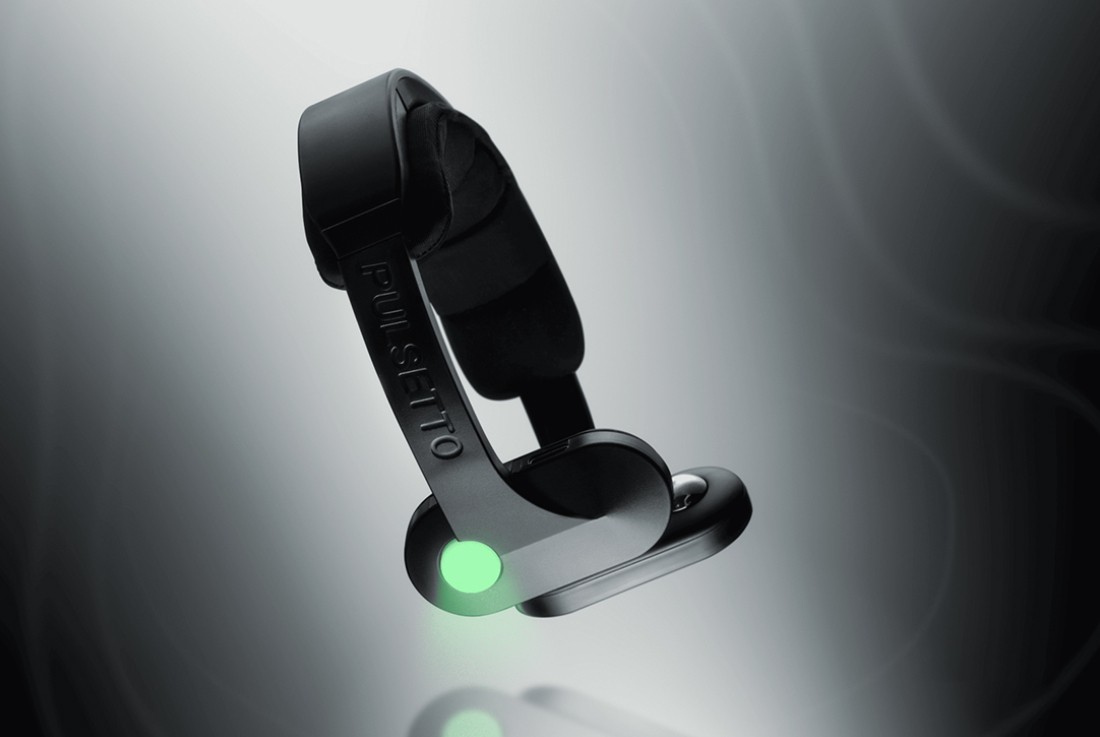
Pulsetto is a neck-worn device that uses mild electrical pulses to stimulate the vagus nerve — the body's longest cranial nerve and the primary switch for shifting from fight-or-flight into rest-and-recovery. Sessions last four to ten minutes, require no training, and the device works hands-free while you do literally anything else.
It's also, somewhat unexpectedly, one of the better wellness gifts you can buy right now — if you know what you're getting into.
This piece covers three key things most Pulsetto reviews don't: whether this device actually makes sense as a gift for someone in your life, how it holds up across a real month of daily use in a packed schedule, and whether the science behind it justifies the price or whether you're buying a very expensive placebo.
The Gift Nobody Returns
Why Pulsetto Works as a Gift
Most wellness gifts fall into one of two traps. They're either too nice but passive (think a candle, a journal, a bath bomb) or too demanding (a meditation app subscription that requires the recipient to build a whole new habit from scratch). Pulsetto lands in a rare middle ground: it does something noticeable in under five minutes, requires almost no learning curve, and feels like actual technology rather than a vague gesture toward self-care.
For high-stress professionals — nurses, teachers, caregivers, founders, new parents, military veterans — the appeal isn't "here's something relaxing." It's "here's something that works in the time you actually have." Four minutes before bed. Four minutes between meetings. Four minutes in the car after dropping the kids off. That specificity makes it giftable in a way that open-ended wellness products aren't.
The price point ($542 for the Lite, $578 for the FIT, but often on sale on Amazon for more around the $250-300 range) also sits in genuine gift territory — comparable to a high-end pair of noise-cancelling headphones or a premium smartwatch band, and significantly more memorable than a year of Calm or Headspace.
Unboxing: Wow Factor or Medical Device Vibe?
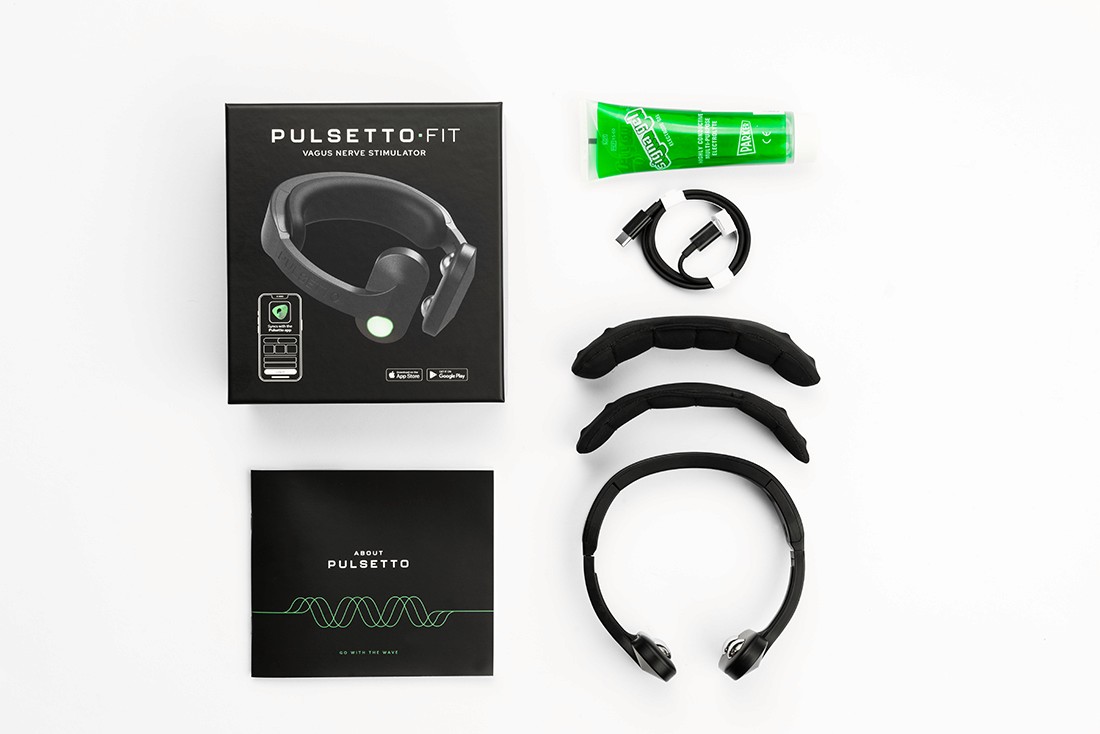
Pulsetto's packaging is clean and modern, but the device itself looks more "wellness tech" than "luxury gift." It's a lightweight neck collar with steel electrodes, a tube of conductive gel, a USB-C cable, and a user manual.
That said, it doesn't read as clinical or intimidating either. The device is sleek enough, the app onboarding includes video tutorials, and the whole experience leans more "cool gadget" than "medical equipment." If you're gifting it to someone who already wears an Oura Ring or tracks their sleep on a Fitbit, this will feel like a natural addition. If you're gifting it to your technophobe aunt, you might want to do the initial setup yourself first.
The Gifting Checklist: What the Recipient Needs to Know
Here's where gifting Pulsetto requires a little more thought than dropping AirPods in a box. The recipient will need to:
Download the app and create an account. The device doesn't function without the companion app (iOS and Android). This takes about five minutes and the in-app tutorial is clear, but it's still a step that could stall a less tech-comfortable recipient.
Learn the gel routine. Each session requires a pea-sized amount of conductive gel applied to both sides of the neck or on the contact points on the device. It's not complicated, but it is an extra step, and the gel can feel slightly messy.
Find their intensity sweet spot. The device has nine intensity levels. Starting too high feels jarring (one user compared it to a shock collar); starting too low does nothing. Most people settle into the 4–6 range after a few days of experimenting.
Commit to at least two weeks. Immediate calming effects are common, but the real sleep and anxiety improvements build over 14 to 28 days of consistent use. A gift recipient who tries it once, finds the gel annoying, and shelves it will never experience the compounding benefits.
How It Compares to Other Wellness Gifts
Gift | Price | Time to Value | Ongoing Effort | "Wow" Factor |
Pulsetto Lite | $240-542 | 2–5 minutes (first session) | 5 min/day + gel | High (tangible tech) |
AirPods Max / Sony WH-1000XM5 | $350–549 | Immediate | Charging only | Very high |
Oura Ring (1 year) | $299 + $6/mo | 1 week (data accumulates) | Wear daily | High |
Calm / Headspace (1 year) | $70–100 | Requires habit change | 10–20 min/day | Low (another app) |
Massage gun (Theragun) | $199–399 | Immediate | Per-use | Medium |
Pulsetto FIT | $278-578 | 2–5 minutes (first session) | 5 min/day + gel | High |
The honest comparison: noise-cancelling headphones are easier to gift and universally appreciated, but they don't actively reduce cortisol. A meditation app subscription is cheaper but statistically likely to go unused. Pulsetto occupies the space of "thoughtful, slightly unexpected gift that actually does something" — provided the recipient will stick with it.
The best-case gifting scenario: someone in your life who complains about stress, already wears a health tracker, and would never buy a vagus nerve stimulator for themselves. The worst-case scenario: someone who finds tech setup frustrating and doesn't like things on their neck.
30 Days With Pulsetto in a Real Life
Most product reviews test a device for a few sessions and report first impressions. But Pulsetto's real value proposition is cumulative — the company's own data shows stress reduction of 39% at two weeks and 56% at four weeks, with anxiety improvements following a similar curve. So the question isn't "does it feel nice the first time?" It's "does it hold up across a month of actually living your life?"
Here's a realistic framework for what daily Pulsetto use looks like — the logistics, the habit stacking, and the data — drawn from long-term user reports and wearable tracking data.
Week 1: The Adjustment Period
The first few days are about calibration. You're figuring out how much gel to use, which is typically less than you think, where exactly to place the electrodes (on the pulse points of your neck, where you'd check your carotid artery), and what intensity level feels right. Expect some trial and error. Some users report mild facial muscle twitching or a tingling sensation that takes a session or two to get comfortable with.
Morning use: Workable but not ideal. The gel needs a minute to apply, and the device leaves a slightly tacky residue that you'll want to wipe off before heading into a meeting. If your morning is already tight, this adds friction. Most long-term users gravitate toward evening sessions during the first week.
Evening use: This is where Pulsetto shines early on. A four-minute session before bed, paired with the app's built-in soundscapes, functions as a sleep on-ramp. Users consistently report falling asleep faster — Oura Ring data from multiple reviewers shows sleep latency dropping by 10 to 15 minutes within the first week.
Commute-friendly? Technically yes, since the device is hands-free. Practically, applying gel in a car or on a train is awkward, and the device is visible enough to draw stares. Most users skip commute sessions.
Week 2: Finding the Rhythm
By the second week, the logistics become automatic — gel, device on, app open, session running in under two minutes. This is when users start experimenting with stacking Pulsetto alongside existing habits.
Pulsetto + morning coffee: A surprisingly popular combination. Several users describe running a four-minute stress program while their coffee brews, turning dead time into active recovery. The device pairs well with a quiet morning because you're already stationary.
Pulsetto + journaling or reading: The hands-free design makes this a natural pairing. Run a session while doing your evening reading or morning journaling, and the calming effect becomes part of the ritual rather than a separate chore.
Pulsetto + meditation app: Mixed results here. Some users find that layering Pulsetto's electrical stimulation on top of guided meditation (Calm, Headspace, Insight Timer) deepens the experience. Others find the tingling distracting. If you already meditate, treat Pulsetto as a warm-up or cooldown rather than a replacement.
Pulsetto + exercise cooldown: A less obvious use case, but users who run a session immediately after workouts report faster heart rate recovery and less residual tension. The parasympathetic activation complements the shift from exertion to rest.
Weeks 3–4: Where the Data Gets Interesting
This is the window where Pulsetto's compounding effects become measurable — if you're tracking. Users monitoring with wearable devices report the following patterns:
HRV trends: Average increases of 10 to 15 points on HRV baselines, with more consistent readings even on objectively stressful days. One user tracking with Oura reported their resting heart rate dropping from approximately 70 bpm to 60 bpm over the first three weeks.
Sleep architecture: Beyond just falling asleep faster, users report improvements in sleep duration (from 5–6 hours to 7+ hours), fewer nighttime awakenings, and better morning energy scores on wearable dashboards.
Stress resilience: This is the subtlest but most frequently mentioned long-term benefit. Users describe not necessarily feeling less stressed, but recovering from stress faster — returning to baseline more quickly after a tense meeting or difficult conversation.
The consistency requirement is real. Users who skip three or more days in a row report noticeable regression in sleep quality and baseline HRV. Pulsetto is a daily practice, not an on-demand rescue tool. After a month of consistent use, some users begin tapering to once daily or even as-needed use while maintaining improvements, suggesting that the nervous system adapts and retains the benefits over time.
The Honest Month-End Assessment
After 30 days, long-term users generally fall into three camps:
Camp 1 (~50–60% of users): Clear, measurable improvement in sleep and stress recovery, confirmed by wearable data. These users continue daily use and consider the device a permanent fixture in their routine.
Camp 2 (~20–25%): Noticeable but modest benefits — slightly better sleep, some relaxation during sessions, but nothing dramatic. These users often keep the device for occasional high-stress periods rather than daily use.
Camp 3 (~20–25%): Minimal to no perceived benefit. Individual nervous system variation, improper placement, and inconsistent use all contribute. These are the users most likely to feel frustrated by the return policy.
Biohack or Wellness Placebo? A Skeptic's Breakdown
This is the section for people who read "vagus nerve stimulation" and think "prove it." Fair enough. Let's separate what's established science from what's marketing, and ask the uncomfortable question: is Pulsetto doing something real, or are you paying $278 for a structured excuse to sit still for four minutes?
What the Science Actually Says
Vagus nerve stimulation: real and well-documented. VNS has been studied for decades. It's FDA-approved for epilepsy and treatment-resistant depression. Peer-reviewed research supports its use for PTSD, inflammation reduction, and autonomic nervous system regulation. The underlying mechanism — electrical stimulation of the vagus nerve activates parasympathetic pathways and reduces cortisol — is not in question.
Pulsetto's specific approach: not independently validated. Here's the gap. Pulsetto uses bilateral neck stimulation (both sides simultaneously) at a pulse frequency of 4,500–5,200 Hz. This specific implementation has not been tested in independent, peer-reviewed clinical trials. The studies Pulsetto cites — showing 39% stress reduction at two weeks, 56% at four weeks, 70% of users experiencing decreased cortisol — come from Pulsetto-funded master's theses, not published clinical research.
That's not the same as saying the studies are fabricated. But funded research without independent replication carries an inherent credibility discount.
Third-party testing raised questions. Health tech researcher Andreas Kummer tested Pulsetto with ECG monitoring and found no measurable HRV changes from the device — though basic breathwork exercises did produce HRV improvements in the same controlled test. This doesn't definitively prove Pulsetto is ineffective, but it does suggest the device's impact may be harder to isolate than the marketing implies.
Bilateral stimulation is a specific concern. Competitors like Nurosym stimulate only the left ear, and some experts note that unilateral (one-sided) vagus nerve stimulation has a stronger safety and efficacy research base. Bilateral neck stimulation theoretically introduces cardiac considerations that haven't been studied in Pulsetto's specific configuration. No adverse cardiac events have been reported among Pulsetto's claimed 1.5 million-plus stimulations, but absence of evidence isn't evidence of absence.
Science Claims vs. Marketing Claims: The Plain-Language Breakdown
Claim | What the Science Says | What Pulsetto Says | Verdict |
VNS reduces stress and anxiety | Strong evidence in clinical settings | "Clinically proven to reduce stress" | Partially true. VNS works; Pulsetto's specific implementation is unproven independently. |
Cortisol reduction in 4 weeks | Plausible mechanism, supported by general VNS research | "70% of users show decreased cortisol" | Unverified. Data comes from funded studies only. |
HRV improvement | Well-established VNS benefit | Users report 10–15 point HRV increases | Anecdotal. User-reported wearable data, not controlled trials. Third-party ECG test found no change. |
Sleep improvement | VNS linked to parasympathetic activation and sleep quality | "Improved sleep in 2 weeks" | Plausible. Consistent with user reports, but could reflect behavioral change (routine + relaxation time). |
Safe for daily use | General tVNS has good safety profile | "Zero serious side effects" | Likely true within intended use, but bilateral neck approach lacks long-term safety data. |
So Is It a Biohack or a Placebo?
The honest answer: probably something in between, and the distinction may matter less than you think.
There are three plausible explanations for why Pulsetto works for the 70 to 80 percent of users who report positive outcomes:
1: Direct vagus nerve activation. The electrical pulses stimulate the vagus nerve, triggering parasympathetic responses, reducing cortisol, and improving autonomic balance. This is the mechanism Pulsetto claims and is consistent with established VNS research — just not proven for Pulsetto's specific parameters.
2: Behavioral scaffolding. The device forces you to stop, sit still, and do nothing for four to ten minutes. The gel application, the app ritual, the session timer — all of it creates a structured decompression window that many stressed people would never take otherwise. In this interpretation, the electrical stimulation may be secondary to the behavioral pattern.
3: Placebo with a boost. The physical sensation of tingling on the neck creates a strong somatic anchor — your body feels something happening, which reinforces the expectation of calm. Combined with the app's soundscapes and the psychological investment of spending $278, the placebo response could be substantial.
Most likely, all three are contributing. And for many users, disentangling them is beside the point. If your HRV goes up, your sleep improves, and your anxiety decreases over four weeks of use — does it matter whether the electrical impulses or the behavioral ritual deserves more credit?
For pure skeptics who need peer-reviewed proof before spending money: wait for independent validation or spend more on Nurosym. For pragmatists who care about outcomes regardless of mechanism: the user data, while anecdotal, is remarkably consistent across hundreds of reviews.
The Practical Details
What's in the Box
The device, a 60g tube of conductive gel (roughly one month's supply), a USB-C charging cable, a user manual, lifetime access to the five core app programs, and a 28-day free trial of the premium subscription.
Ongoing Costs
Replacement gel runs $15–20 per tube monthly. The optional premium app subscription ($10/month) adds guided meditations, breathing exercises, and three additional stimulation programs, but the core five programs are free and unlimited. First-year total cost runs approximately $460 without the subscription, $580 with it.
Who Shouldn't Buy This
Anyone with a pacemaker, defibrillator, or other implantable electronic device. If you are pregnant. People seeking treatment for a diagnosed medical condition (this is a wellness device, not a medical one). Anyone who needs reliable, responsive customer support — Pulsetto's post-purchase service is its most consistent weakness. And anyone who requires rigorous scientific proof before trying a wellness product.
The Bottom Line
Pulsetto is the most accessible vagus nerve stimulator on the market — fast sessions, relatively affordable price, simplest setup. For 70 to 80 percent of users, it delivers real, noticeable improvements in stress, sleep, and nervous system regulation. As a gift for the overworked person in your life who would never buy a wellness device for themselves, it's one of the more thoughtful options available.
Think of it as a $278 bet on your nervous system. For most people, it pays off. For some, it doesn't. The best you can do is buy smart, track your data, give it a real month, and decide for yourself whether four minutes of electrical calm is the habit your body has been asking for.
About

Featured Posts