Auraline's Founder Built a Safety Camera Thinking of Her Daughter
A conversation with founder Elizabeth
Two weeks. That's how long Elizabeth's daughter had been at college when a young woman was stabbed walking alone near campus.
Elizabeth's first instinct was the one most parents would recognize: pull back, ask her daughter to be more careful. But she'd spent her daughter's whole life promising herself she'd never raise her differently than she raised her sons - never hand her a smaller, more careful version of independence just because she was a girl. Now she was about to break that promise out of fear, and she hated it.
That conflict is where Auraline started, in a phone call between a mother and her business partner, Essa, trying to figure out if there was a way to give her daughter a little more protection, and a way for Elizabeth to feel some peace of mind. We sat down with Elizabeth to talk about that call, what came after it, and what she hopes changes for the women who end up wearing Auraline first.
Is there one moment, a specific place or conversation that you keep coming back to as the reason you created Auraline?
The moment I keep coming back to was when my daughter had just left for college. She had been a cross-country runner in high school and chose a school where she could continue running outdoors on beautiful trails around the lakes. Just two weeks into her freshman year, a young woman was stabbed while walking alone near her campus home.
After that, I found myself wanting to tell my daughter not to run alone, not to walk certain places, or to change the way she lived. That was incredibly difficult for me because I had always said I would never raise my daughter differently from my sons. I wanted her to feel just as independent and empowered in the world as they did.
I remember talking to Essa about how conflicted I felt. That conversation stayed with him, and he started researching what women were already using to try to keep themselves safe. That was really the beginning of Auraline.
People already pay a real price for feeling safe - choosing pricier hotels, cabs instead of transit, "safety premium" rooms. Where does Auraline actually fit into this? Is it meant to replace those costs?
I don't think Auraline replaces every decision someone makes about personal safety, nor would we ever want someone to take a risk simply because they're wearing our product.
What we hope it does is give women another layer of protection that travels with them. Today, women are constantly making small calculations: Do I take the more expensive ride home? Do I walk a few blocks? Do I run on this trail alone? Do I call someone while I'm walking? Do I share my location?
Auraline is designed to bring several of those safety behaviors together in something you can wear as you go about your day. Over time, I hope that means women don't always feel they have to pay a premium simply to feel more secure, but the bigger goal is giving them another tool that supports their independence rather than restricting it.
Some would say safety products turn peace of mind into an upsell - pay more, worry less. What do you think about that critique?
I think that's a fair concern, and it's something we take seriously.
We don't want to sell fear. In fact, Auraline was created because I hated the idea that fear was beginning to dictate what my daughter could and couldn't do.
Women already spend money, change plans, alter routines, and limit activities because of safety concerns. Our goal isn't to tell women they should be more afraid. It's to build something that works alongside behaviors they're already using and hopefully gives them greater freedom to keep doing the things they want to do.
For me, the measure of success isn't whether someone thinks about Auraline more. It's whether, over time, they can think about their safety a little less.
Walk me through, step by step, what happens when someone activates the device.
The idea behind Auraline is that you clip it on before you begin an activity rather than waiting until something feels wrong.
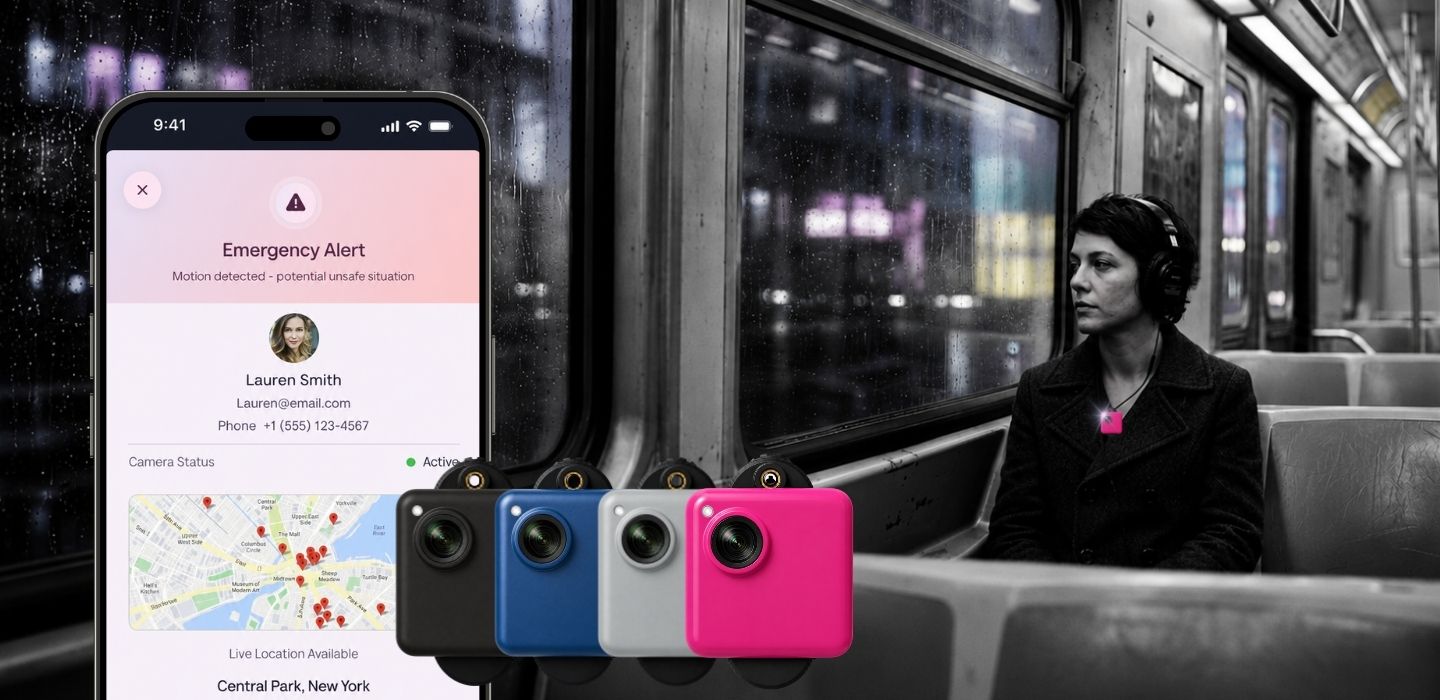
Once activated, the wearable works together with the Auraline app and the safety features the user has chosen to enable. The device is designed to provide a visible deterrent while its technology helps monitor what is happening around the wearer. If a potential concern is identified or the wearer needs help, Auraline is designed to connect that information with the user's chosen safety network so trusted contacts can be brought into the situation quickly.
One of our biggest priorities in designing the experience has been reducing the number of things someone has to remember or physically do during a stressful situation. We want the technology to do more of the work so the wearer doesn't have to.
What's one thing about how it works that you think people should know but wouldn't think to ask?
One of the most important things is that Auraline isn't meant to stay hidden in a purse or pocket.
The visibility of the device is intentional. Most personal safety products are designed to be used once something has already happened or when someone feels threatened enough to reach for them. We wanted Auraline to be present before that point.
The hope is that someone approaching a woman wearing Auraline recognizes that there is technology present, that she is connected, and that their actions may be seen or shared. That visible deterrence is an important part of how we think differently about personal safety.
Once Auraline is on the market and it's in the hands of its first users, what changes about their day - not how they feel about it, but what they actually do differently?
I hope the change is surprisingly ordinary.
Maybe a woman clips on Auraline before going for her morning run instead of texting someone, "I'm leaving now - I'll let you know when I'm back."
Maybe a college student walks home from the library without having to call her mom and keep her on the phone the entire way.
Maybe someone traveling for work clips it on before walking from dinner back to her hotel. Or someone getting into a rideshare uses it as naturally as she puts on her seatbelt.
The goal isn't for women to suddenly start doing dangerous things they wouldn't otherwise do. It's for the safety routines they're already managing every day to become simpler and more integrated into the way they live.
For someone reading this who's deciding whether to pre-order, what should they expect, and when?
A pre-order means becoming one of the earliest Auraline users and, in many ways, part of the group that helps us introduce a new approach to personal safety.
We want to be very transparent throughout that process. Customers should expect regular communication about development, manufacturing, testing, and delivery rather than wondering what's happening after they place an order.
Most importantly, we want people to understand that we're building a real piece of connected hardware, not simply an app, and we're going to prioritize getting the product right over rushing something into someone's hands.
What are you most eager to learn from the people who pre-order first?
I'm most interested in learning when people actually reach for Auraline.
We've designed it around situations we know women already think about - running or walking alone, college campuses, travel, ridesharing, commuting, or simply getting from one place to another at night. But I think our first users will teach us about situations we haven't even considered.
I also want to understand which parts of the experience become habitual. Do people clip it on every morning before a run? Do parents buy it for their daughters and then decide they want one themselves? Do women use certain features much more than we expected?
Those early customers aren't just purchasing Auraline. They're going to help us understand how personal safety technology fits into real life, and that feedback will shape where we take the product next.
Final Thoughts
What stands out most in talking with Elizabeth is how ordinary the moment behind Auraline really is: a parent wanting to protect her child.
Auraline is built around that same choice: the calculations women already make every day, and a tool that doesn't ask them to give up feeling free in order to feel safe.
Only the first wave of Auraline users will really know if it works the way Elizabeth hopes. Her own measure of success is that people wearing it end up thinking about their safety a little less, not more. That's a different promise than most safety products make. It might also be a more honest one.
Pre-orders are open now, with the current allocation closing this week.
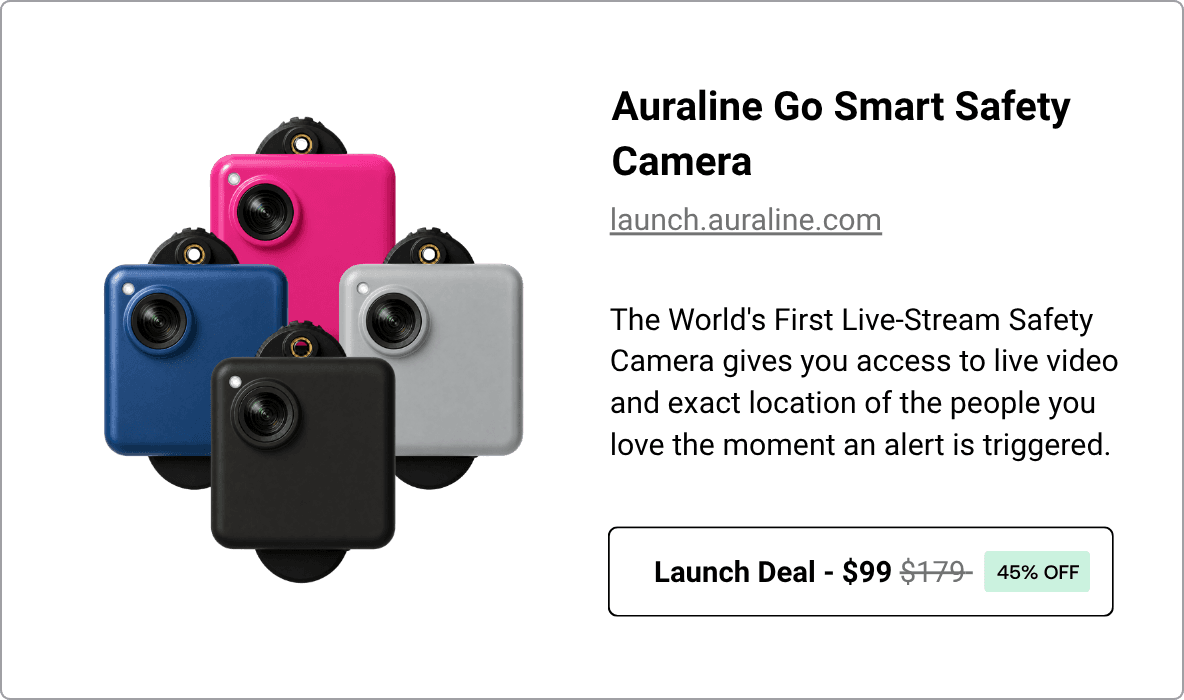
Reserve your Auraline for $99 at https://launch.auraline.com/
About

Featured Posts